


Welcome to the second issue of EarthLore’s Quarterly HighLights, where every three months we share inspiring stories, reflections, photos and video clips of our work.
For over 10 years, EarthLore has been accompanying rural farming communities in South Africa and Zimbabwe on journeys to revive local seed diversity and indigenous knowledge systems, deepen traditional farming practices and strengthen customary laws that align with the principles of Earth Jurisprudence. This includes recognising that human communities are part of a wider Earth community, governed by the laws and limits of Nature. Central to our work is the protection of ancestral lands and ecologically sensitive Sacred Natural Sites that supports their restoration, vitality, and continued role in holding ecological and cultural integrity.
In our second issue we share news about EarthLore’s enriching journey with communities in Bikita, Zimbabwe, and Mpumalanga and Venda provinces in South Africa who are strengthening and growing the agroecological movement in southern Africa in ways that affirm the sacredness of the land. The work ranges from harvesting water to honey in ways that express care, reverence, appreciation and love for the living world and honour the sacredness of the Earth. June is also Youth month in South Africa with three articles featuring young farmers being posted on EarthLore’s website. Important rituals, ceremonies and cosmic events also took place this quarter, including the Winter Solstice on 21 June.
Lessons from Flood Damage: Discovering the Healing Power of Agroecology
Rehabilitation is continuing after serious floods in Zimbabwe and South Africa caused extensive damage at the end of 2025 and the first two months of 2026. Backbreaking work is ongoing – strengthening gabions, digging contours, constructing swales and berms and earth dams. This is to harvest rain water and mitigate future flood damage.
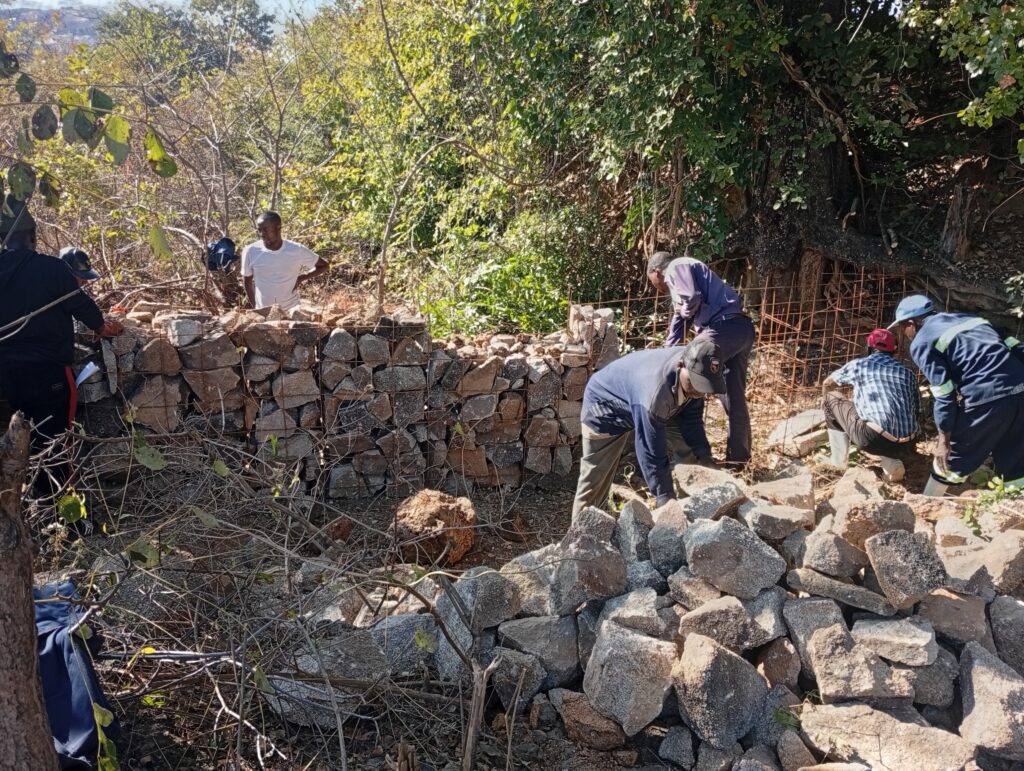
Youth from Gangare community repairing gabions destroyed by the floods
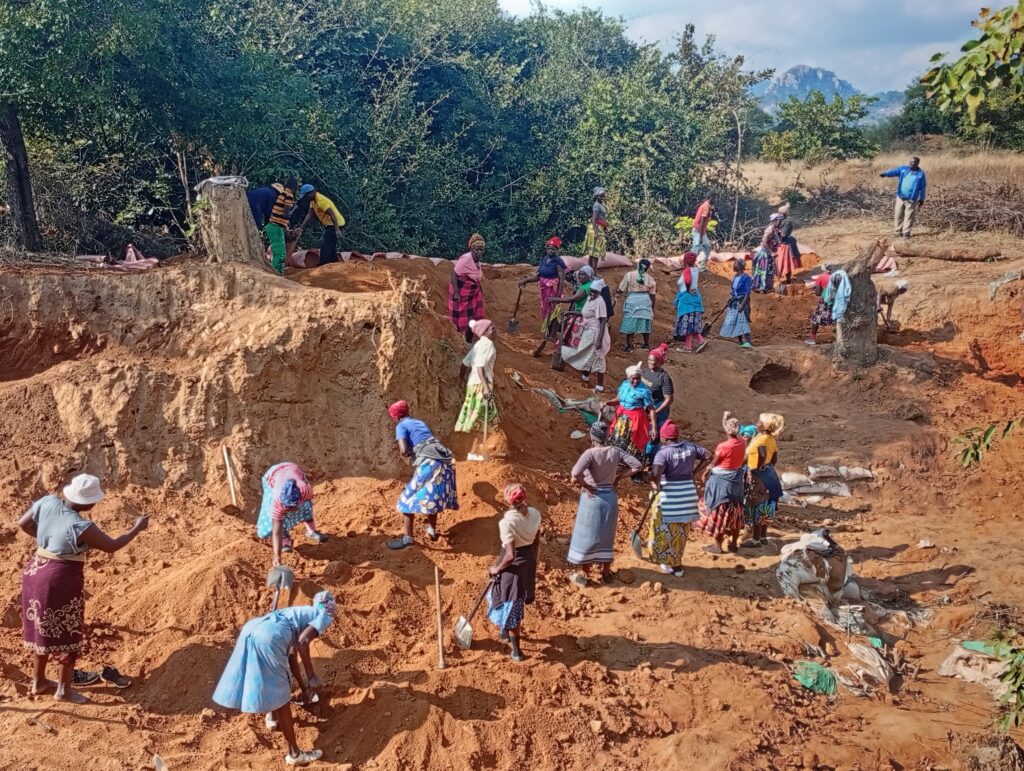
Mainly women from Mamutse repairing an earth dam
Meanwhile, Vho Merium Netshilunzhe from Mazwimba, Venda, learnt firsthand how farming agroecologically significantly controlled flood damage on her farm.
“Agroecology is not only a farming method but a way of healing the land and restoring the relationship between people and nature.” Vho Merium.
Three hectares of Vho Merium’s 5Ha farm had been planted with eucalyptus trees and two hectares were food gardens, where she practices agroecology. When her farm was damaged by the floods, she noticed a striking difference between the two sections of her farm. The eucalyptus plantation suffered significant damage. Three large gullies formed when water tore across the landscape and gouged deep channels into the earth. However, the two hectares under agroecology remained stable and productive. Vho Merium’s contour systems, the crop diversity, and her mulching provided continuous soil cover. This contributed significantly to slowing down the flood waters,reducing erosion, and improving water retention in the soil.
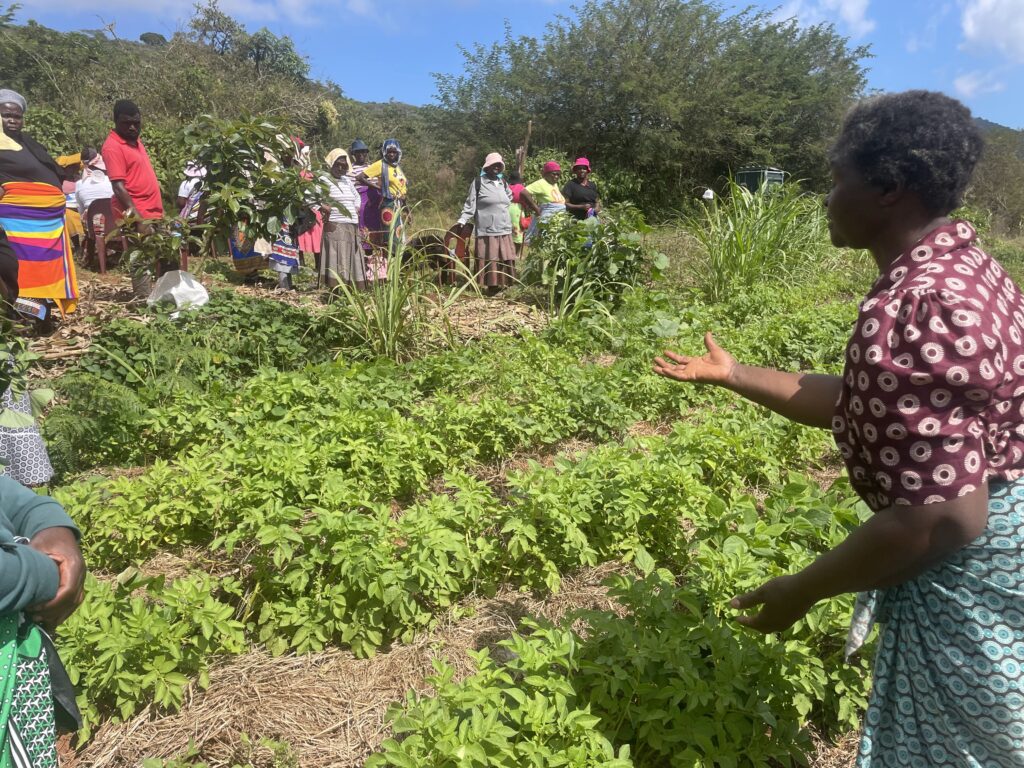
Vho Merium in her field
After Vho Merium witnessed firsthand how agroecology protected her land, she decided there and then to reduce the size of the eucalyptus plantation and expand her fields to produce a greater diversity of food, herbs, fruit and other crops. She now has eight extensive contours and two swales to slow down and harvest rainwater. This is improving the productivity and resilience of her fields.
She is deeply committed to sharing her knowledge and has invited a group of young women farmers to work alongside her. They have helped her dig contours, build swales, produce food, share ideas and knowledge, and gain valuable practical experience.
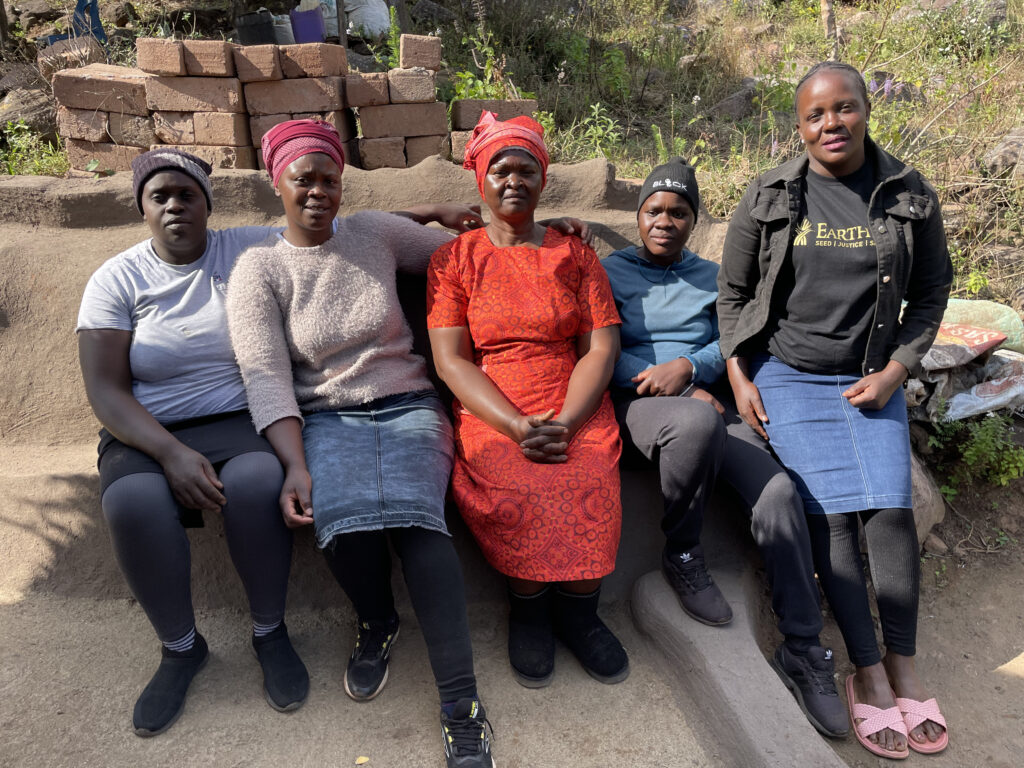
Vho Merium Netshilunzhe (middle) with four young women farmers who help in her field: Lucy Luvhengo, Mbulaheni Thathaisa, Seani Manyoka and Zwiswa Manyoka.
Plant Trees to Keep Boreholes Flowing
The successful completion of long awaited boreholes in Mamutse, Masasire, Gangare and Mutsinzwa, Bikita, was celebrated by the communities and farmers who are members of the community gardens served by these boreholes.
“We are very happy with the borehole solar system in our garden. It has been very difficult for us because the river dries up during the dry season, but now we can irrigate our plants all year round.” Elizabeth Turugari, Mamutse
For decades, access to water has been an ongoing challenge, exacerbated by climate change and degradation of the landscape from overgrazing and cutting down indigenous trees for building materials and firewood. This was the result of communities relinquishing their traditions and rituals together with the understanding that ancestral land is sacred. After realising the serious impacts of abandoning their roots, they are reviving their traditions, rituals and ceremonies.
Part of understanding the sacredness of the land has been to establish tree nurseries at homesteads and community gardens, where farmers propagate saplings and donate trees for sharing and planting to replace those that have been cut.
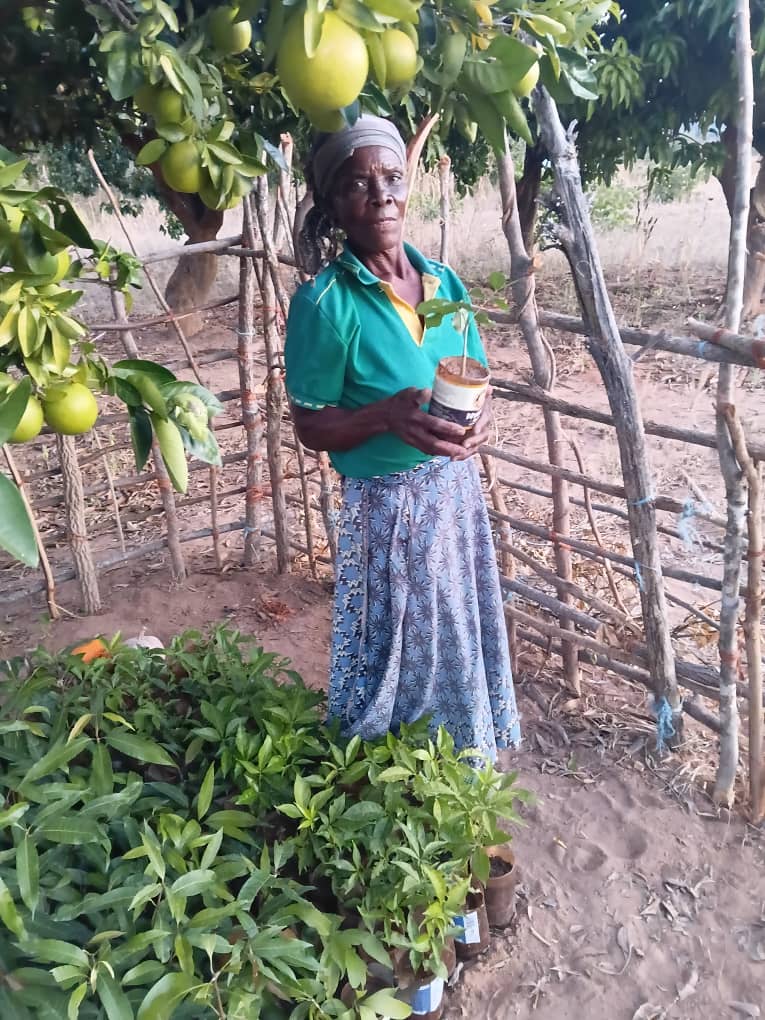
Magna Gundidza from Gangare in her tree nursery at her homestead, where she propagates avocado and indigenous trees.
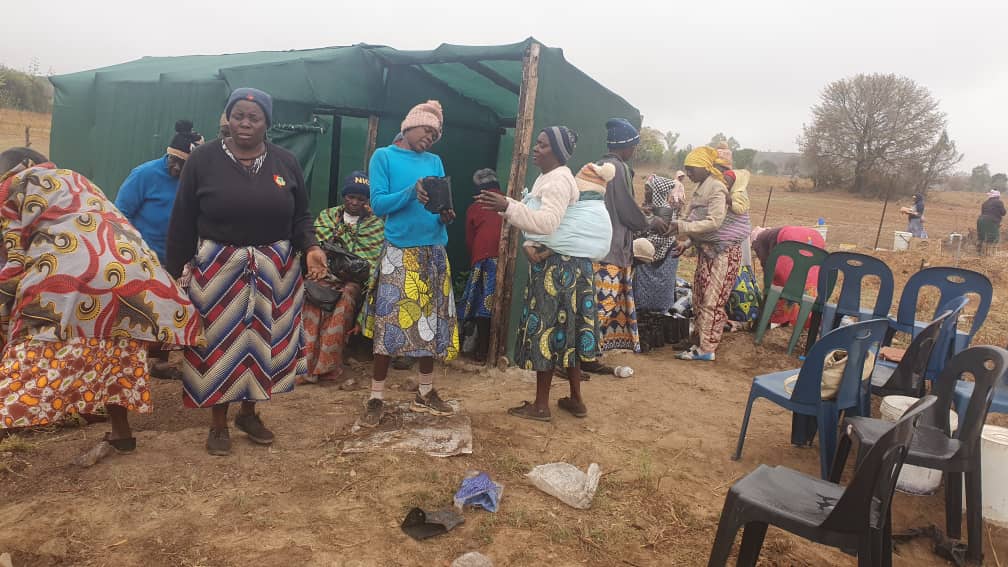
At Mabheka garden in Mamutse, farmers selected trees from the communal nursery to plant at their homesteads, to improve water harvesting and the soil.
Boreholes are no longer viewed as stand-alone installations, but as part of water harvesting systems and caring for the wider landscape to contribute to a healthier environment and greater sustainability. People increasingly understand the vital role played, particularly by indigenous trees, in the cycle of ensuring a supply of water to boreholes fed by groundwater.
Trees secure the soil, slow down rainwater and store water in the ground. They send their roots deep into the earth where they form underground pathways allowing water to percolate into deep aquifers. Above ground, their leafy shady canopies, their decaying leaf litter, and their surface roots act as filters and natural sponges that slow down surface runoff and break the impact of heavy rains. This allows rainwater to seep into the ground over time and recharge the water table.
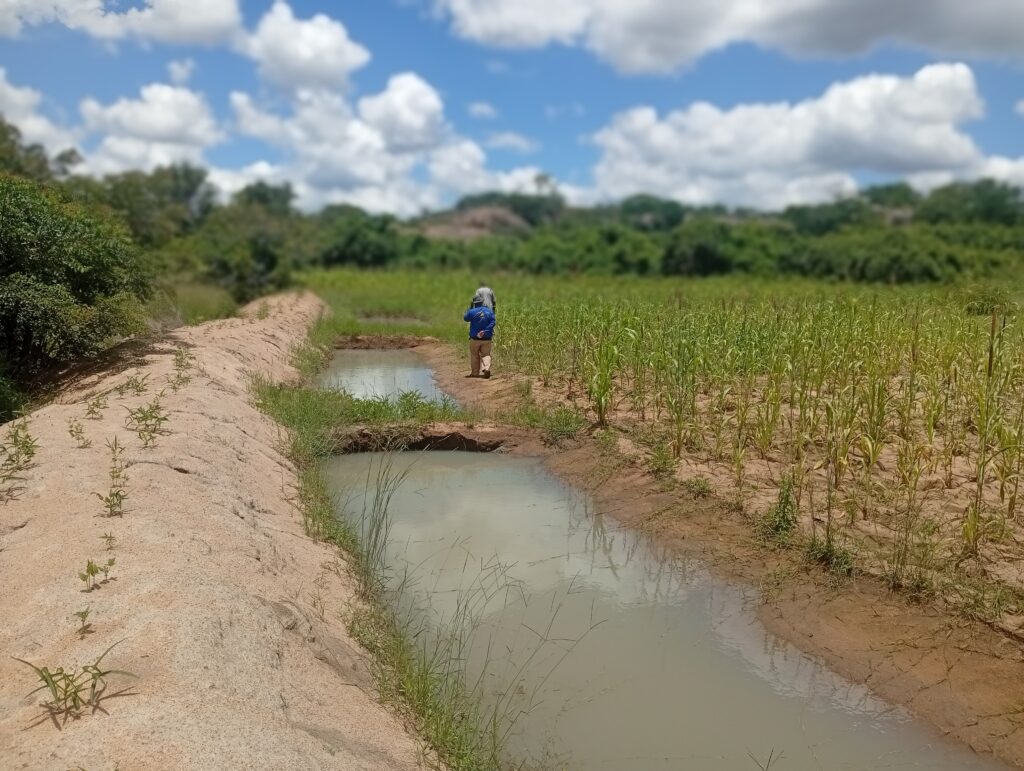
In Gangare, these earth dams and a long swale are part of the rainwater harvesting system that feeds aquifers
Reviving Neglected Rituals Roots Communities in Gratitude
At the heart of reviving rituals and ceremonies is the understanding that all creation is sacred.and the importance of giving thanks and gratitude to the ancestors. Rituals and ceremonies underpin traditional customary laws and traditional governance systems grounded in lived experience of the sacred. This worldview evokes deep reverence, awe, and connection. It elevates experiences and places from the mundane to the profound. It fundamentally transforms how people treat the planet and show respect and gratitude to all life forms. It also informs how people behave in their communities and perceive and treat strangers and foreigners. It is a world where Sacred Natural Sites are recognised as places of cultural, ecological and spiritual significance.
The communities EarthLore accompanies are all committed to reviving long-forgotten rituals to reconnect with their roots, care for the land, and face modern challenges by drawing on traditional wisdom. Reviving forgotten and neglected rituals pose many challenges and are as difficult and demanding, if not more so, as reviving lost seeds like svoboda (Barnyard Millet). Svoboda was thought to be extinct for 40 years in Bikita and the southern region of Zimbabwe before it was “found” again in 2016. It is here that the role of the elders, respectfully referred to as “living libraries”, is so important. Knowledgeable elders still hold memories of how these rituals were performed, even if these are faint and half forgotten. By coming together, they stimulate recollections of what used to be done. They understand that each element holds symbolic meaning of deep significance and thus the importance of being rigorous and precise when rituals are performed. This is challenging.
First Fruits Thanksgiving Rituals in South Africa
Uluma in Venda
Nearly 100 people, including chiefs, elders, spiritual leaders and farmers from Bikita, Steenbok and Elukwatini, attended Uluma in Mazwimba, Venda. Farmers brought a smaller harvest of first fruits this year after their fields had been damaged by the floods. Particularly affected were pumpkin and groundnut harvests.
The custodians who led the ritual guided the community to display their harvested crops carefully to honour the ancestors. They then instructed people to remove their shoes and walk barefoot to the cattle kraal. This connected participants to the earth and recognised the sacredness of the place. A Phahla was said, a prayer of gratitude to the ancestors, before a portion of the crops was fed to cattle named after the ancestors. This shows respect and gives back to nature. The sweet cane was then shared amongst the people gathered at the kraal.
Uluma is not a simple cultural event, but a complex system of relationships between people, animals, land, ancestors, and knowledge systems. It holds together celebration and challenge, spirituality and ecology, memory and practice. In this way, the ritual combines continuity and learning that honours the past and negotiates the present and future.
Ukwetfula n Mpumalanga
Ukwetfula is the Siswati name for Uluma, the first fruits harvest ritual. The celebration in Enkaba, focused on honouring the land and traditional and agroecological farming. Led mostly by women elders dressed in their colourful traditional attire, Ukwetfula included singing traditional songs and drinking brewed marula beer made from local wild marula fruits.
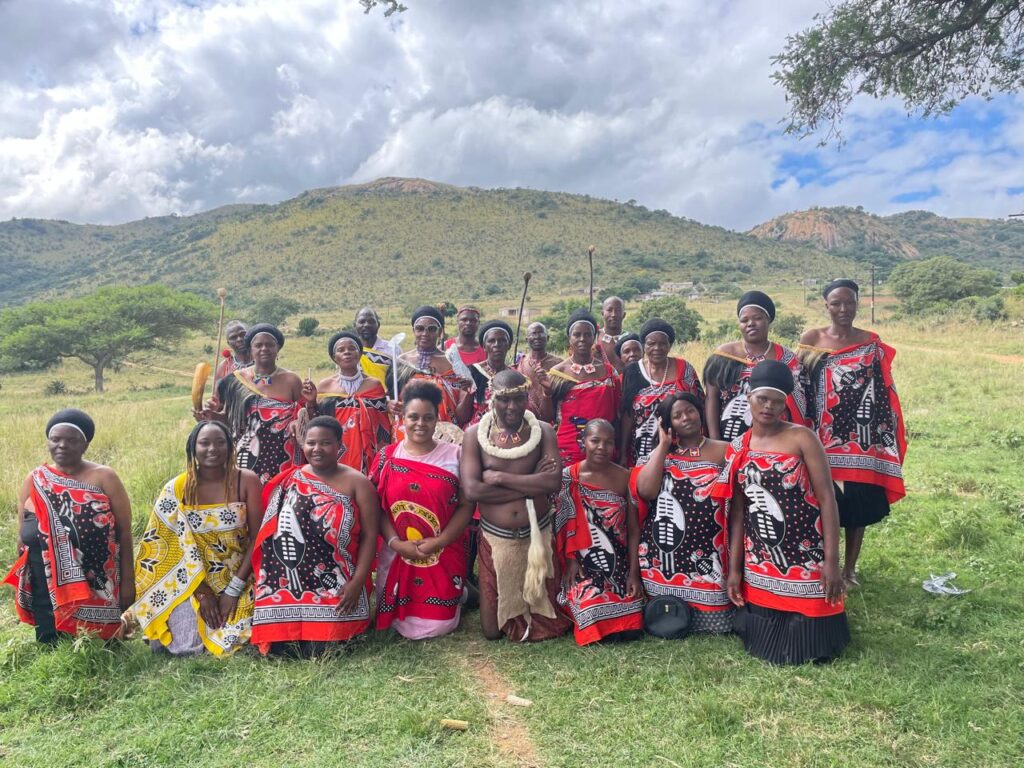
Members of the Enkaba community in their colourful tradtional attire worn for rituals and celebrations, like Ukwetfula.
The community also reflected on the seed fair, held in Enkaba, in September 2025, where blessed traditional seeds had been shared and exchanged to protect their local food systems and heritage. Many of these seeds had been planted and produced the crops brought to this year’s Ukwetfula ritual. The seed fairs and rituals have strengthened awareness of seed sovereignty and biodiversity conservation.
“We are here to present the first fruits that we have harvested from our gardens using traditional farming methods that do not require chemical fertilisers. We ask Indlunkulu, the representative of the royal house, to bless what we have presented together with the marulas.” Make Mdluli.
Numerous traditional farming practices have been lost to modern input-dependent agricultural systems, but there is strong willingness to recover and strengthen organic farming practices. Farmers who adopted agroecological principles and planted early, reported better crop yields, despite the heavy floods.
The Sacred Natural Sites of Chirorwe
Indigenous communities view the natural landscape as alive and filled with Sacred Natural Sites, places of ecological importance and wonder. In Chirorwe, Sacred Natural Sites were neglected and almost forgotten until 2015, when the community revived their traditional millet crops and their rituals. This also encouraged them to recognise neglected Sacred Natural Sites. Last year, in October 2025, the Eco-cultural mapping process created renewed awareness and, almost all of the Sacred Natural Sites in Chiroorwe have been recognised and are being mapped, restored and protected by custodians and concerned community members. By standing together and being guided by elders, Chirorwe is successfully strengthening its customary laws to protect sacred spaces from outside disruption, extractive enterprises and commercial compromise, ensuring that ancestral connections strengthen and grow.
The broader Chirorwe community is actively engaged with several recently recognised ancestral sites, including the Gute, Chikohomero, and Zuvarigere springs at Matongo. In Takaendesa village, the community has revived ancestral laws at the Living Waters of Mahambira, where they have re-introduced collecting water using calabashes and natural *hwakwa*, the hard bowl-like fruit shells from the Strychnos Spinosa tree.
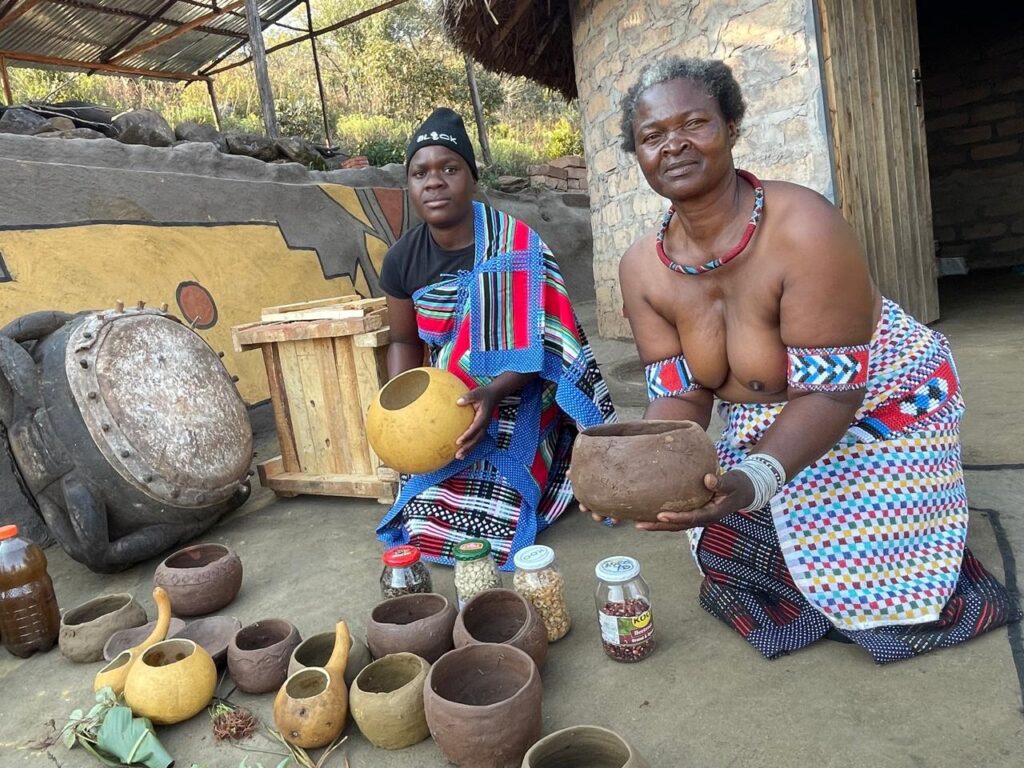
In Mazwimba, Venda, the lost tradition of making clay pots, dolls and other artefacts is being revived by women, like Vho Merium, who are teaching youth, like Seani, to work with clay.
People are being discouraged from using plastic containers and buckets and to return to traditional containers. While this is being done to honour and show respect for sacred sites, it is in line with growing global awareness and concerns that micro-plastics are contaminating soil, air, water, oceans and the human food chain.
Residents of Mushanjire village agreed to explore their own solutions to heal the Rashiro Spring rather than immediately seeking outside assistance. To circumvent complications of political ward delimitation, ways are being found, through dialogues to clarify the importance of honouring and protecting newly identified sites like Muruzi, Chireya, Mabhunu, and Resoro, The focus is on community education and building cohesion and community collaboration.
Sweet Sovereignty: The Role of Bees in the Mazwimba Landscape
On 30 June 2026, over 50 farmers gathered at the homestead of Londani Takalani, a young 30-year-old farmer from Mazwimba, Venda, South Africa. They were there to participate in a peer-to-peer knowledge sharing about beekeeping practices. The training aimed to strengthen community understanding of the important role that bees, as vital pollinators, play in supporting food security, biodiversity, seed multiplication, and landscape restoration. Bees are essential in strengthening crop yields and local seed and food sovereignty.
“The bees help pollinate my avocado trees and other crops in my backyard garden. They are an important part of both my livelihood and farming system.” Londani Takalani
Participants were inspired by Londani’s extensive avocado orchard, tree nursery and nine active nests for bees and showed eagerness to learn from this young man who comes from their own community. The peer-to-peer sharing of agroecology practices is an initiative by EarthLore that aims to spread the extensive knowledge and expertise that exists in local farming communities accompanied by EarthLore in Venda and Mpumalanga, South Africa, and in Bikita, Zimbabwe. This form of learning helps to build trust and confidence when people see farmers from their own communities demonstrating proficiency and achieving success. This empowers them to feel able to do the same.
After the field visit, the group moved to the Mazwimba Learning Centre, where Londani demonstrated the construction of boxes providing nests for bees. This activity was accompanied by discussions about how bee populations actively drive the regeneration of indigenous vegetation. People shared their observations that bees were contributing to visible improvements of indigenous vegetation on surrounding mountains that were becoming denuded. By pollinating local flora, bees also play a significant role in improving soil health, enhancing water retention, and restoring the flow of seasonal rivers and springs.
As more is learned about bees, there is increasing awareness of the wisdom of bees, particularly wild solitary bees who are highly selective and specific pollinators. An interesting discussion ensued about collecting seeds of indigenous plants favoured by bees and to create a seasonal “bee calendar” to harmonize seed-saving, honey harvesting, and broader agroecological activities throughout the year. It is with eager anticipation that communities await the next sweet golden harvest of honey, a promise and blessing from the bees.
Story of short video by Mashudu Takalani taken in Mazwimba, Venda:
Vho Grace Thathaisa shares how older women are teaching youth about the traditional way of protecting and decorating floors using cow dung mixed with ash. They mustn’t only know about commercial floor polish.
Mashudu asks Seani Manyoka how she feels about this knowledge being passed on to her. Seani replies that she is happy because many of these practices were disappearing and now youth are learning their traditions and are able to return to simple affordable materials that are locally available.
Then Vhakoma arrives at the homestead. He teasingly accuses Vho Rosina of burning the mango trees. He says she must stop. He knows she is the one doing this… .
Mashudu shifts her attention to Vho Masega and asks about the box he is altering to make a good nest for the bees. Young Londani Takalani comments that he is learning so much about bees and he wants to continue learning so that he can follow the path of working with bees.
June: Celebrating Achievements of Young Farmers
Three inspiring stories shared by young farmers were posted on EarthLore’s website in June to celebrate Youth Month and acknowledge the achievements of young farmers. .
Mashudu Takalani, EarthLore’s Programme Facilitator, a passionate young farmer in her own right, sums it up as follows: “The vision of young farmers is to be recognised as key contributors ….. Too often youth are left out of decision-making spaces. We struggle to find real opportunities. Our voices are unheard, yet our ideas are powerful and necessary for the future.”
The first story, entitled “Growing Hope. Food, and the Future”, features Patric Thwala and Bongiwe Ngwenya, from rural farming areas near Elukwatini, Mpumalanga, South Africa.
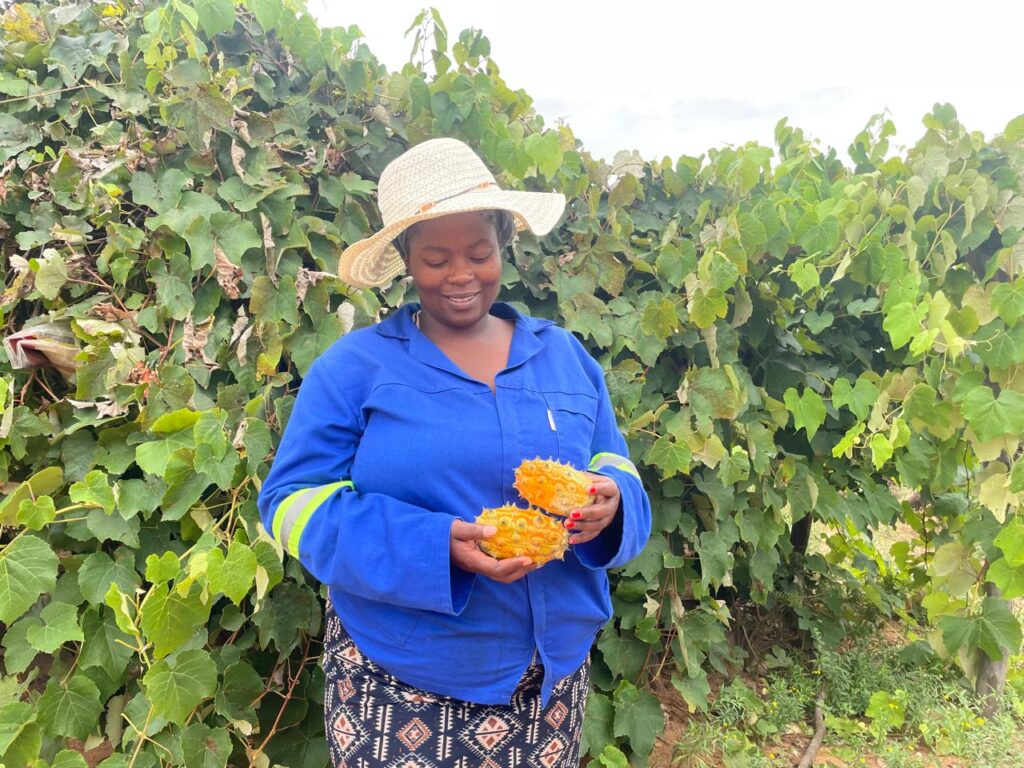
Bongiwe Ngwenya holding African Horned Cucumbers/Melons harvested from her garden. She and Patric Twala are inspiring role models for young farmers in Elukwatini.
Their story is rooted in seed, soil, memory, and hope. It is a story of youth finding a place in farming, through agroecology, a dignified and promising path where young people and elders work side by side, and where wisdom meets innovation in the fields.
The second story, Agroecology and Elders Transform Young Lives and Landscapes, shares the exciting journey of transformation that four young women farmers: Lucy Luvhengo, Seani Manyoka, Zwiswa Siphuma, and Mbulaheni Thathaisa, have been on. During the Covid lockdown, in 2020, they attended community dialogues and practical agroecology trainings held in their community of Mazwimba, Venda, Limpopo, South Africa.
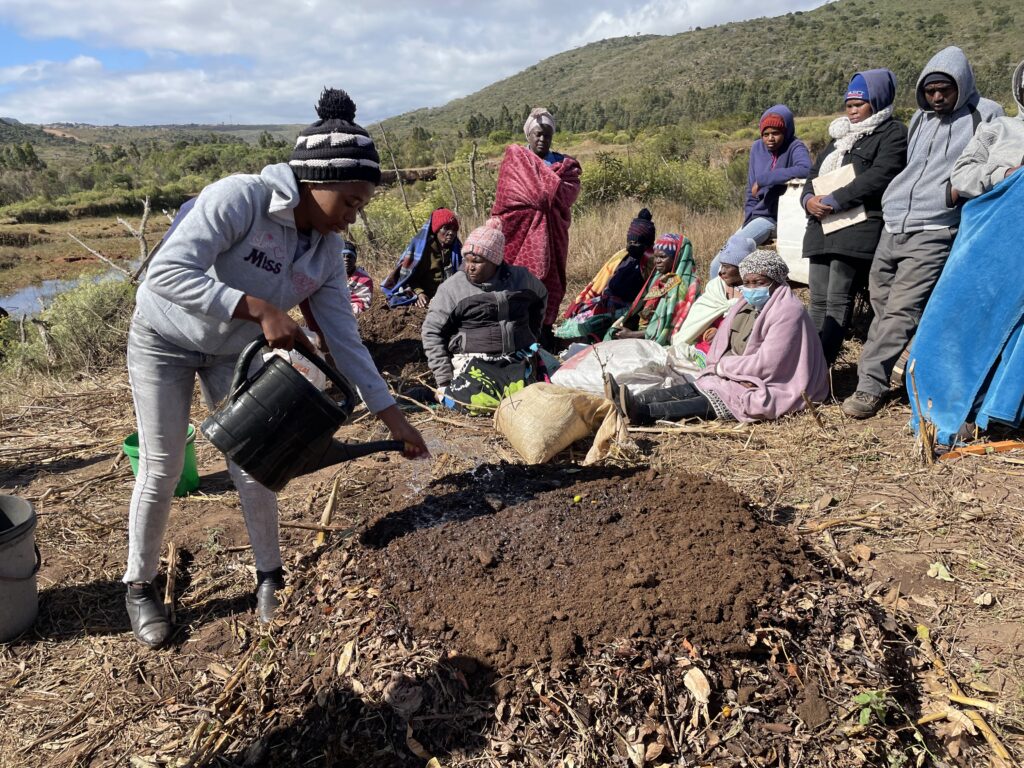
Mazwimba youth learn by participating in making compost during an agroecology training activity
There they discovered that farming agroecologically is not only about producing food but also about preserving culture, protecting biodiversity, restoring ecosystems, and building confidence and resilient communities.
The third story is about Esther Mubungari and Netsai Muchafa. Seeds of Knowledge Sown by Two Young Women Farmers Trigger a Revolution in Bikita shares how these two young women responded to the devastating loss of their livestock through January disease, a deadly tick-borne illness. This also resulted in the loss of the cattle manure, traditionally used to fertilise their crops.

Read about young farmers, Netsai and Esther, who brought Bokashi biofertilizer to Bikita.
They had recently attended training to make Bokashi biofertilizer, a quick-fermenting, nutrient-rich organic biofertilizer made entirely from cheap, locally available materials. Bokashi slashes input costs while actively regenerating soil health – unlike chemical fertilizers that destroy soil biology. Their project that was started out of a combination of desperation, curiosity and determination, soon transformed into a community-wide mindset shift.
Rooting the Future in the Past
Many of the highlights this quarter have centred around the revival of traditional seeds, farming practices, rituals and Sacred Natural Sites. Many people in the so-called “modern” world probably consider these practices out-dated and even regressive. Dr Samuel Alexander, however, an environmental educator, scholar, and advocate with an interdisciplinary PhD in environmental law and politics, emphasises the importance of “being grounded in reverence, simplicity, aesthetic reorientation, and ecological participation, capable of recognising the Earth as intrinsically meaningful rather than merely instrumentally useful”. Alexander concludes that it is “imperative for humanity to rediscover forms of sacredness through which restraint ceases to appear merely as sacrifice and instead becomes an expression of care, fidelity, and love for the living world.” This worldview is evident in the farming communities EarthLore accompanies.
We hope you enjoyed this second edition of EarthLore’s Quarterly HighLights. Look out for the next one focusing on the third quarter of the year, July to September 2026.

