


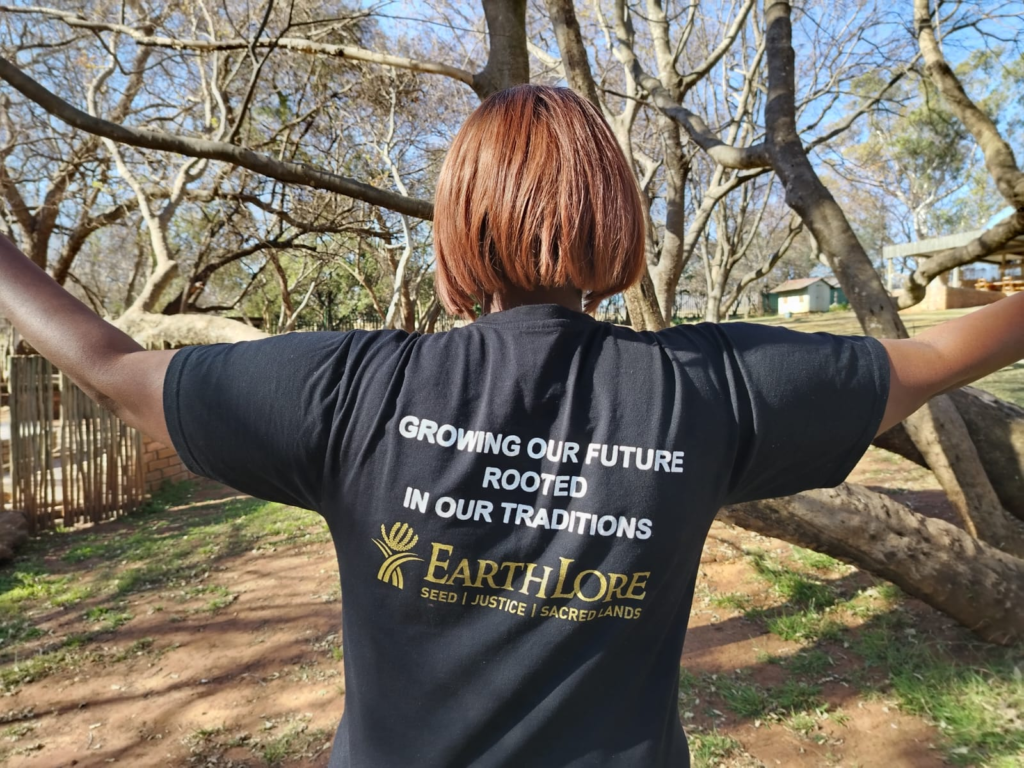
On 9 August, South Africa celebrates Women’s Day, in recognition of the resilience, strength and achievements of South African women 70 years ago, when more than 20,000 women marched to the Union Buildings in Pretoria to protest against oppressive pass laws. Women came from all parts of the country to be in Pretoria to join the march. Some came from as far afield as Cape Town and Port Elizabeth.
Many of the African women wore traditional dress, others wore the African National Congress colours – green, black and gold; Indian women were clothed in white saris…. Many women had babies on their backs..…Throughout the demonstration the huge crowd displayed a discipline and dignity that was deeply impressive (Walker 1991:195).
They congregated outside the Union Buildings, waiting in vain to have their presence acknowledged. Neither Prime Minister Strijdom nor any of his senior staff were there to receive the bundles of signed petitions the women had come to deliver. After their leaders decided to pile the petitions outside Strijdom’s office door, the huge crowd stood in silence for half an hour. Then they left in the same orderly way they had arrived, but now their voices rang through the streets of Pretoria singing ‘Nkosi sikeleli Afrika’…. God bless Africa….. which became South Africa’s national anthem in 1994, when the country became a democracy. The impact of that historic march in Pretoria on 9 August is still felt today.
Empowering Women’s Voices in Venda and Mpumalanga
Today is Women’s Day in South Africa and the theme for the month of August this year is : “Empowered Women Empower The Nation”.
“Empowered women grow in spaces where they are encouraged to step up and take on greater responsibility while finding and using their voices to make a difference. When an empowered woman speaks with confidence, knowledge and authority, even men in high places listen and grow to respect her. Becoming empowered is an ongoing process linked to courage, integrity, authenticity, responsibility, trustworthiness, and caring for others, for the Earth and all of creation.” Mashudu Takalani
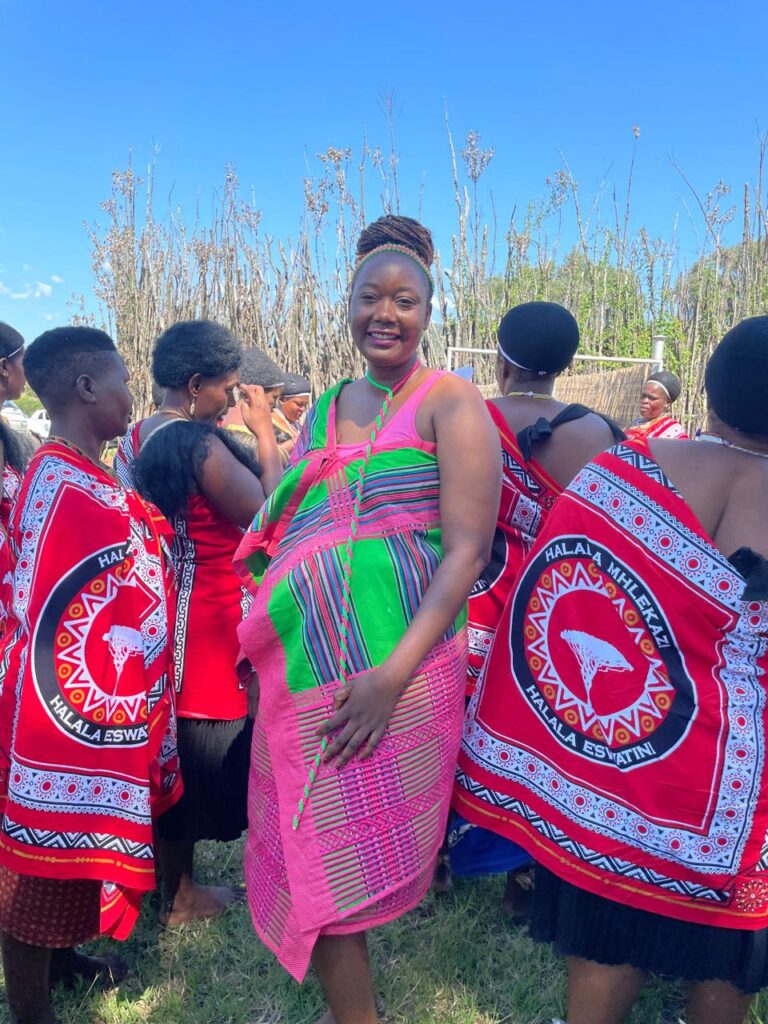
Mashudu in a colourful traditional Venda cloth amongst women from Elukwatini wearing their traditional red, black and white cloths.
These insightful words emerged during a conversation with EarthLore’s Mashudu Takalani and were endorsed by Xolisiwe Themba. These two women, respectively from Venda, Limpopo, and Steenbok, Mpumalanga, a predominantly Siswati-speaking community close to the Swaziland border, accompany rural farming communities on a journey to transform their lives, heal their sacred ancestral landscapes and work together to reweave the basket of life.
This is a journey of revival; of growing a future rooted in age-old traditions that have stood the test of time. It involves the revival of robust traditional seeds, seen as sacred, and reviving traditional sustainable farming practices, supported by agroecology. It is intertwined with the revival of their rich cultures, rituals and ceremonies, and traditional governance systems. The work is both inspiring and challenging. It demands commitment, passion and integrity. It also requires women who are empowered.
Let Mashudu speak from her experience of working in rural communities that are still strongly patriarchal but, where women are again being seen and respected as powerful, particularly as mediators between the spiritual and human realms:
“In our communities, the strength of women becomes visible when they tell their own stories instead of just taking part quietly. Through seed fairs, eco-mapping, and community dialogues, women become increasingly confident and willing to speak in the presence of traditional leaders and royal councils. They are being heard and leading the way. We are now seeing changes, like women being given land, something that was unthinkable a few years ago. Though land ownership remains a persistent challenge for young women and girl children, we are witnessing shifts that are encouraging. When a woman’s voice is heard and respected by her community, real progress and transformation happens.”
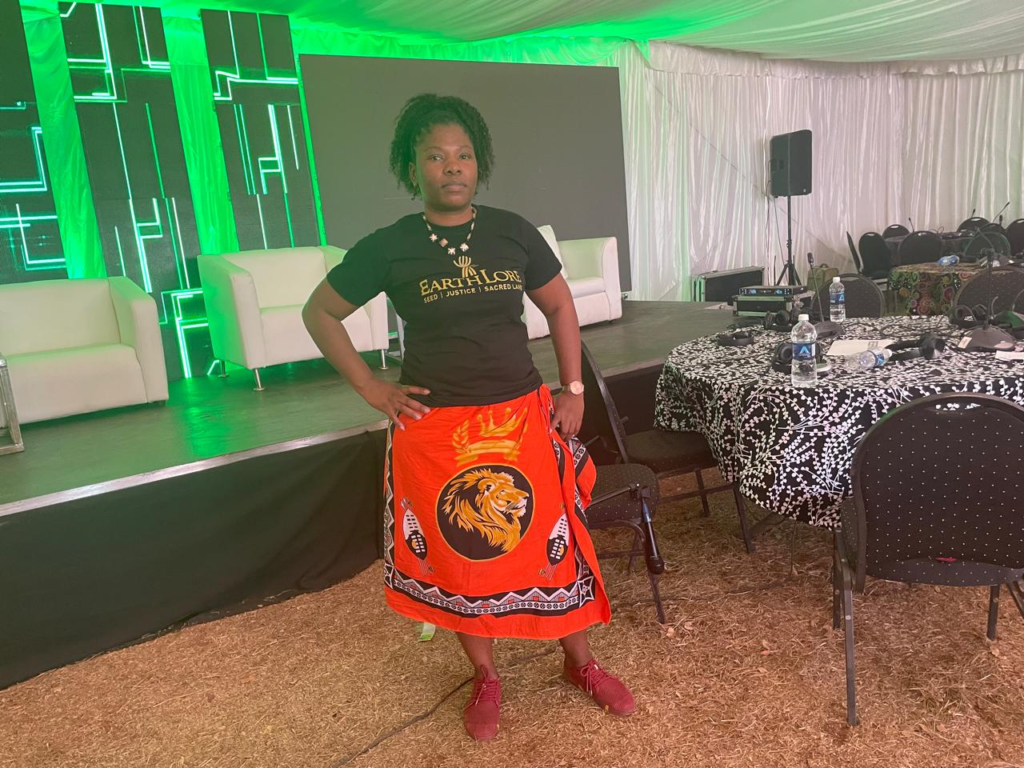
Xoli attending the Good Food Festival in Harare, Zimbabwe.
For Xoli, an empowered woman pulls up other women to become empowered too and to stand together for the good of their families, the community and the environment. For her, the collective power of women is very important and she has dedicated her life to teaching, mentoring, imparting knowledge and sharing resources with other women. Her focus is very much on making space for younger women and for girls. She is actively engaged in passing on the Swathi culture to younger generations by supporting the education and initiation rites of young girls, including teaching them their traditional dances and songs. She is currently encouraging women to come together to revive making clay pots to replace plastic containers that are contaminating our soil, water, and air with microplastics.
Mashudu’s Empowering Journey with EarthLore
“Working with EarthLore has helped me find my own voice and confidence. In the past, I attended community dialogues and agroecology trainings that were led alongside male colleagues, with my role being mainly supportive and dealing with logistics. Over time, as I engaged more actively in planning and in visits to the field, my confidence and my role grew.
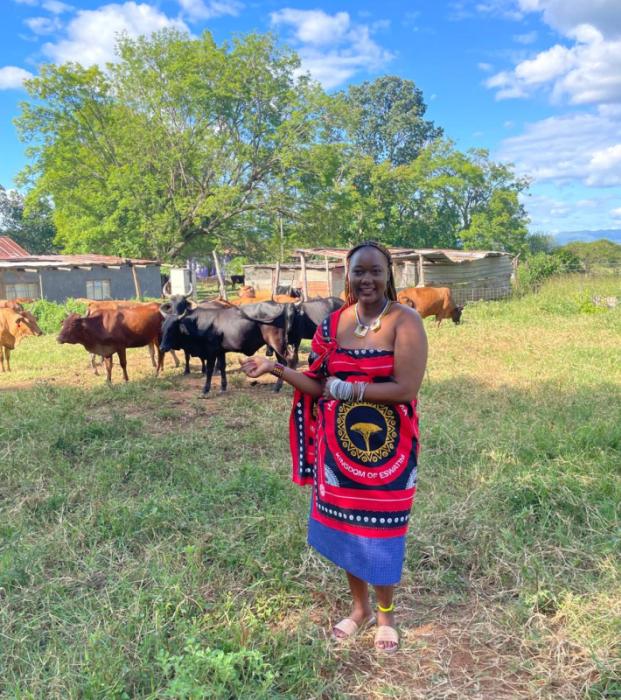
Mashudu, during a field activity she was facilitating in Mpumalanga, wearing a red, white, black and yellow cloth associated with the Swathi culture
“Today, I am responsible for coordinating, facilitating, and guiding learning exchanges, dialogues, and discussions around food sovereignty, farmer-led seed systems, and agroecology. I also represent EarthLore at international symposia and have appeared on podcasts discussing our work of revival, as well as policies impacting on the rights of farmers and how to strengthen advocacy for the Farmer’s Rights movement. EarthLore has provided the ground where my confidence could take root, enabling me to advocate alongside farmers and partners to revive indigenous seeds and to value traditional knowledge that is being eroded. Being trusted to facilitate these spaces has allowed me to recognise my own ability to contribute positively to shaping the future and contributing to the well-being of future generations.”
Xoli’s Empowering Journey with EarthLore
“Working with EarthLore has provided me with the tools, knowledge, and understanding of how important our work is. It helps me to reconnect with the past and deepen my understanding of how our ancestors lived. It also deepens my appreciation of the materials they used and the sustainable practices that allowed them to live in harmony with the natural environment and all other beings. Sadly, this traditional knowledge has since disappeared, but we are helping to bring it back. I feel honoured and privileged to be part of an organisation like EarthLore, committed to accompanying rural communities who are reviving their culture, traditions, ceremonies and rituals. This work is deeply meaningful and brings me a sense of fulfilment and happiness.
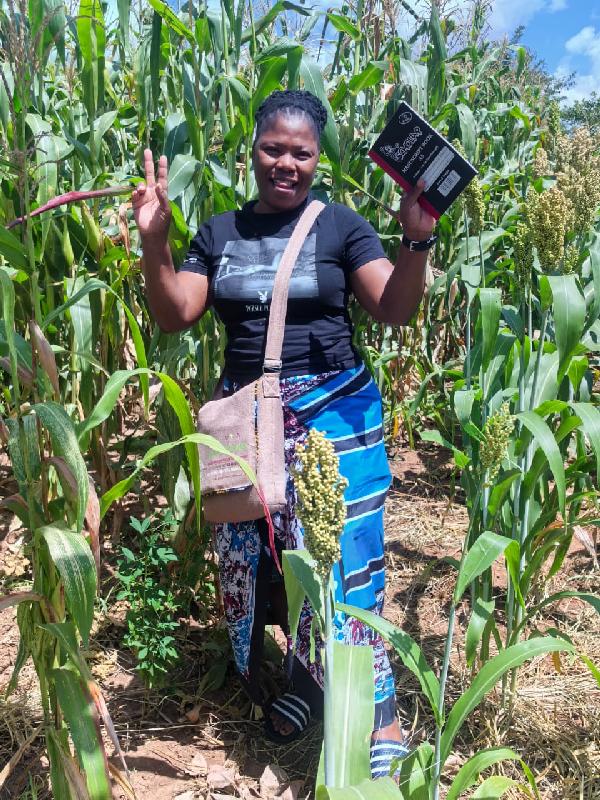
Xoli in a field of millet sorghum, one of the hardy traditional crops revived in Steenbok that is highly nutritious, delicious and contains numerous health benefits.
How Mashudu will be Spending Women’s Day
“This Women’s Day, I want to celebrate the women around me. I want to honour my older women colleagues who moulded me to become the woman I am today. My first manager was tough and demanding and, though it was not easy for me because I was still very young, she would praise me when I tried. This encouraged me to try even harder. I learned a lot from her that I still apply today, and, for this, I will be forever grateful. I also honour the women who came before and who have passed on. It is my memory of them that keeps the spirit of this work alive.
“Most of all, I celebrate our women farmers, who are the true caretakers of the land. Women understand how much care it takes to plant, grow, and save seeds. Our work is about looking after everything together: our seeds, our land, all living creatures – the seen and the unseen, and the young women who will come after us. This Women’s Day, I join with all these women to celebrate our shared journey.”
How Xoli will be Spending Women’s Day
“My plan is to visit an elderly woman for a one-on-one dialogue with her. I will be asking her about the responsibilities of women in the past and their roles as leaders. I want to record the knowledge of the elders as this feeds directly into EarthLore’s work. I am fascinated by stories of the past that reveal how fair and caring our lives used to be when we were still connected to our culture, to each other and to our traditional practices. Everybody had a role to play and was part of the community: old and young, male and female, strong and weak, sick and healthy, widowed or married.
Every conversation I have with an elder is like visiting a living library. For me, Women’s Day will be a day when I celebrate the past, the present and the future.”

