


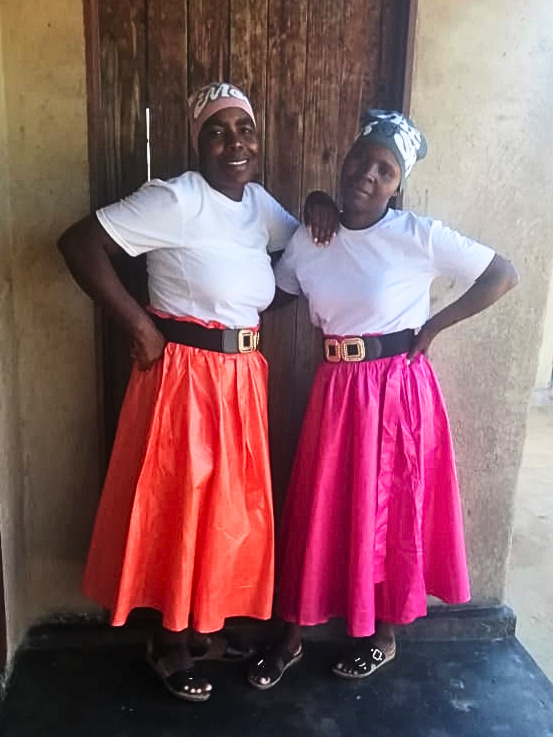
Esther and Netsai, young women farmers from Mazwimba community, Bikita, who shared their knowledge of how to make Bokashi and triggered a biofertilizer revolution.
This is the final story in EarthLore’s celebration of June, which is Youth Month but we view youth as essential for the present time and for our future and we endeavour to celebrate, nurture and support youth throughout the year. The 2026 theme of The Future Calls acknowledges the vital role of young people in shaping a modern, sustainable future with key objectives of entrepreneurship, creation of livelihoods, health and well-being. The story of Esther and Netsai is one of these inspiring stories.
For rural households across Bikita, a crisis was quietly brewing in the soil. A devastating outbreak of January disease, a deadly tick-borne illness, had decimated local cattle populations. For young farmers like Esther Mubungari (37) and Netsai Muchafa, the loss was two-fold: they lost their livestock and the manure traditionally used to nourish their crops. But Esther and Netsai refused to let a lack of resources dictate their harvest. Instead, they changed their mindset.
Discovering Bokashi: Innovation Born from Necessity
During agroecology trainings and community exchange visits facilitated by EarthLore, Esther and Netsai had learned about Bokashi biofertilizer, a quick-fermenting, nutrient-rich organic biofertilizer made entirely from cheap, locally available materials. Bokashi slashes input costs while actively regenerating soil health unlike chemical fertilizers that destroy soil biology. Teaming up with other young women from the Kumboedza Garden Group and a few adventurous neighbour’s, Esther and Netsai gathered their materials and mixed their very first heap of Bokashi. Their attempt was born out of curiosity and a determination to adapt.
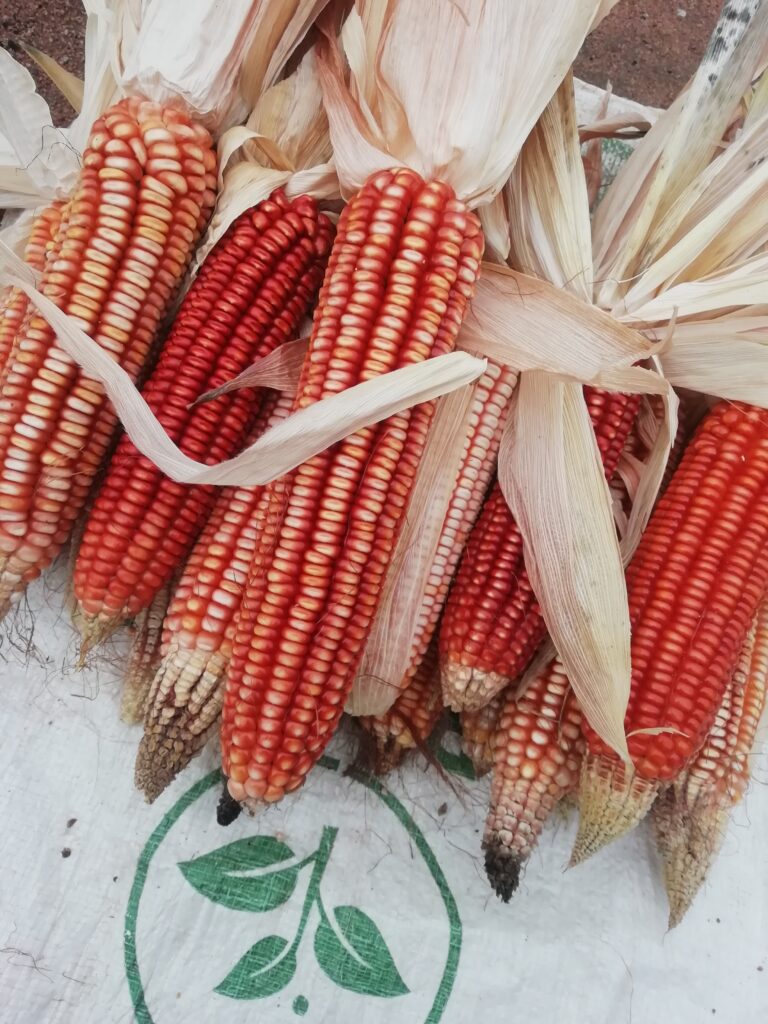
A Harvest of Hope: The proof is in this harvest of Munyadzagudo, a variety of traditional maize that Esther and Netsai planted after applying Bokashi to their fields.
To test the innovation, they applied their homemade Bokashi to a small trial plot that they planted with pearl millet and a resilient traditional maize variety, known locally as Munyadzagudo.
When harvest time arrived during the 2025/2026 season, the results spoke louder than any textbook. The visual contrast in their fields not only caught the eyes of Esther and Netsa, it caught the attention of the entire village.
Inspiring a Movement: The Power of Peer-to-Peer Learning
What started as a small-scale experiment by two young women has fast transformed into a community-wide mindset shift. Intrigued by the bumper harvest, neighbours invited the duo to their homesteads to show them the secret behind their success.
Esther and Netsai didn’t guard their knowledge; they embraced their roles as youth leaders. They began facilitating hands-on, step-by-step demonstration sessions, proving that the most effective teachers are often a farmer’s own peers.
“We are just happy helping other farmers like us learn about other ways of improving their soil fertility without using a lot of money,” Esther says with a smile. She actively encourages neighbouring villages to step up: “Don’t hesitate to invite us for a demonstration once you have gathered the required materials!”
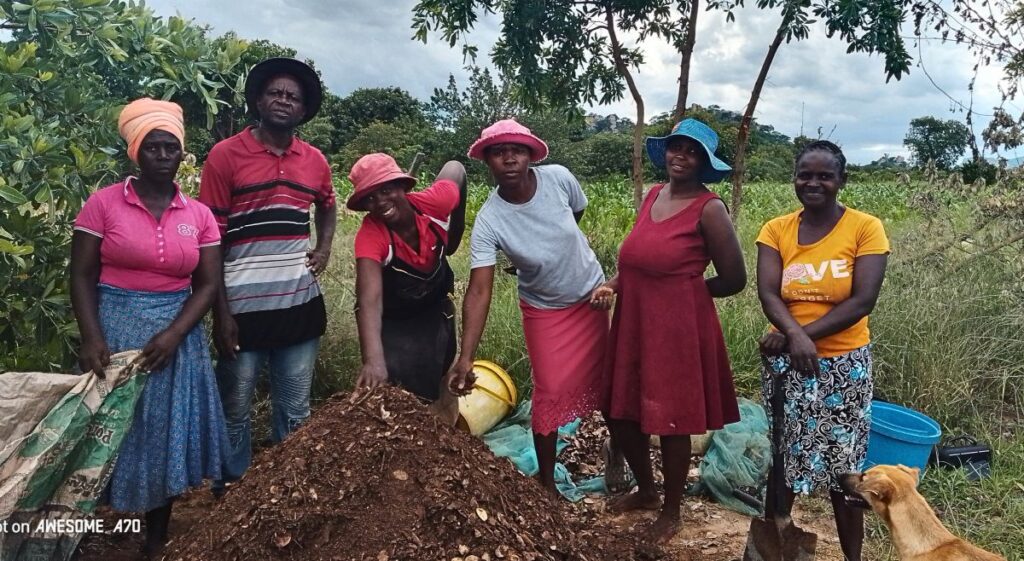
Esther and Netsai with other young women farmers from Mazwimba proudly admiring their Bokashi.
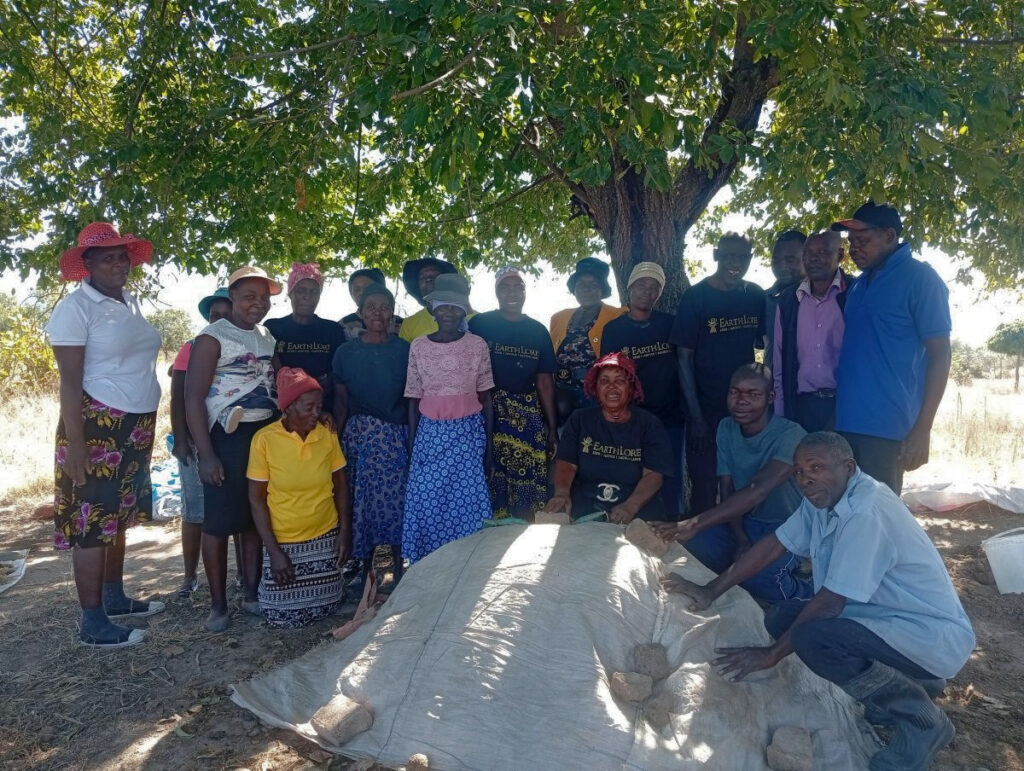
A group of Mazwimba farmers enthusiastically engage in making Bokashi with guidance from Esther and Netsai. It is important to cover the organic material to eliminate as much air as possible to promote fermentation.
The Youth Agroecology Initiative
Esther and Netsai’s journey proves that youth leadership in agriculture isn’t about waiting for expensive external aid. It is about a mindset transformation that views local environmental challenges as opportunities for ecological innovation; shared vulnerability, where farmers who are still learning are willing to experiment alongside other farmers; and generous knowledge sharing that demystifies sustainable practices so that peer-to-peer learning can organically scale up and build climate resilience.
By stepping up as teachers, these young women are rewriting the narrative of rural farming. They are proving that when youth transform their minds and share their knowledge, they don’t just grow crops, they grow a movement.

