



Mai Beauty Ziwewe, Kumboedza garden, Masasire, enjoying the dancing and singing at the 2026 Bikita Seed Fair
Ten years ago, in August 2017, the first Bikita Seed Fair was celebrated at.Mabheka garden, in Mamutse. When excited EarthLore and ZimSOFF team members, local farming communities and visitors gathered on that day, no one imagined what would grow in the 10 years, from 2017 to 2026. The small seed of change and hope has produced a magnificent tree. Its many branches are full of lush leaves and a wide variety of delicious fruits. Its roots and bark hold healing properties and medicinal powers. The tree is home to numerous insects and many birds nest in its branches. It provides shade that children play in and where people from afar meet together to talk and share ideas. This is the remarkable tree that reflects the 10 year journey of the Bikita Seed fair.
On 27 August 2026, the 10 year celebration of the Bikita Seed Fair took place in the Nebarwe community. Nebarwe joined the other 5 Bikita communities three years ago to embark on their journey with EarthLore. The Nebarwe farmers were proud to be chosen to host the auspicious 2026 Bikita Seed Fair. They engaged in the preparations with energy, enthusiasm and joy to ensure the gathering would be as memorable as the first Bikita Seed Fair in 2017.
The Seed Fairs document the revival and spread of diverse local seeds and a growing variety of millets, traditional maize, pulses, gourds, pumpkins, ground nuts, wild fruits, wild foods and medicinal plants. At the August 2026 Seed Fair, over 60 species were on display and a total of 123 varieties. .
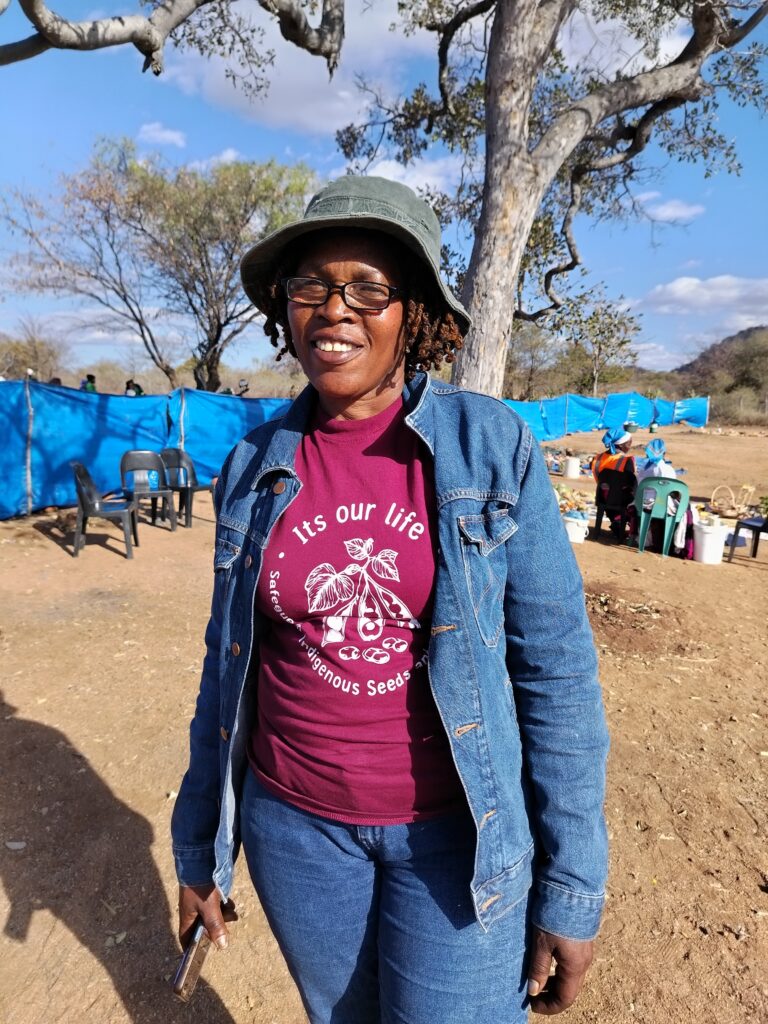
Monica Chaminuka, Agricultural Business Advisor from the Department of Agriculture is an EarthLore champion, who has been judging the seed displays since the first Bikita Seed Fair in 2017.
The main part of the programme provided a platform for representatives from the 6 Bikita communities to share their reflections of the past 10 years of celebrating these vibrant annual events. The Seed Fairs are milestones marking the transformation from hunger, drought, reliance on food-aid, neglect of traditions, rituals and culture, absent leadership, and a devastated environment to increasing seed and food sovereignty, healthy nutrition, community cohesion, rehabilitated landscapes, strong traditional leadership, clear governance systems, revival of rituals and ceremonies, recognition of ancestral territories and protection of Sacred Natural Sites.
Mai Revesu Mapuranga from Mamutse spoke first. The first seed fair, held in 2017, had taken place in Mamutse. However, she started the story in 2015, the year several Bikita farmers decided to plant Pearl and Finger Millet as their staple crop instead of hybrid maize that could not survive the extreme heat and dry conditions of the area. Changing to millet marked a turning point for these farmers who harvested bumper crops that year, while farmers who planted hybrid maize, had little or nothing to harvest and their families went hungry and had to depend on food-aid. Soon these farmers also switched to planting millets and this is now the main staple grown in Bikita.
Mai Mapuranga then shared the inspiring story of the revival of Svoboda” or Barnyard Millet in 2016, when Mai and Vha Mukondo, an elderly couple from Mamutse, shared a small packet of Svoboda seeds with farmers to grow and propagate. Mai Mukondo had kept these precious seeds safe for 40 years.
“Most of us had never heard of Svoboda. Those who knew the name thought it was extinct. In just 10 years, it is now on everyone’s lips and widely available in this part of Zimbabwe. I was told it is even grown in KwaZulu-Natal, South Africa. The story of Svoboda has given us hope that other lost seeds will be found and revived and shared.”
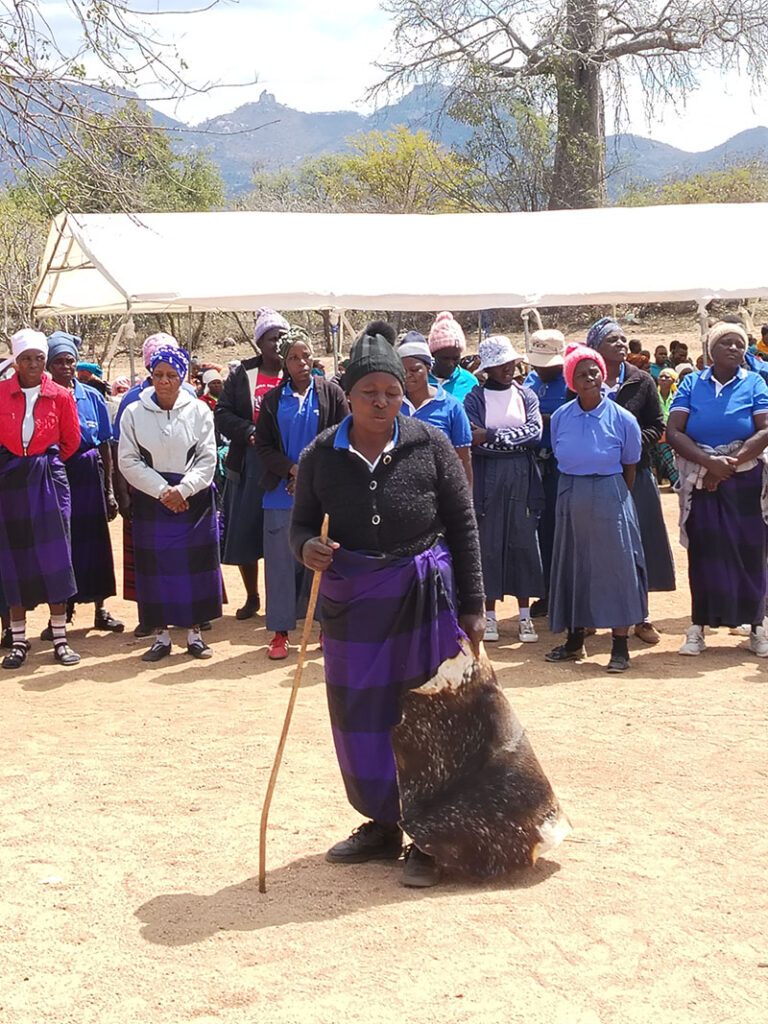
Mai Veronica Chikwevo, spokesperson for Masasire, shared how EarthLore brought families and communities together.
Mai Veronica Chikwevo, from Masasire, spoke next and shared some interesting information about Svoboda beer. Apparently it is delicious and even when people drink a lot of the beer and end up drunk, they remain agreeable. Unfortunately there was no Svoboda beer available at the celebration for people to test the truth of this assertion. Hopefully there will be Svoboda beer next time!
Mai Chikwevo went on to say:
“EarthLore has helped bring families and communities together. It has also given us opportunities to visit several farming communities and travel to other countries to learn from each other. It has opened our eyes and changed our lives”
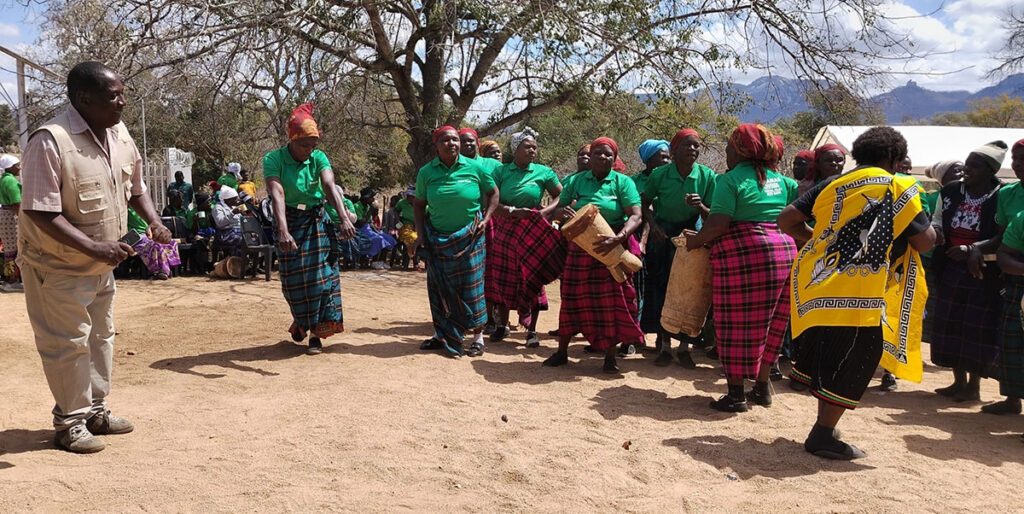
Chamas garden, Gangare village, celebrating after their seed display was judged the best for the 2026 Bikita Seed Fair.
Mai Shamiso Chindevani, from Chamas garden in Gangare, agreed that learning exchanges to different communities and countries have taught farmers many things:
“Farmers now know how to make their own organic fertilisers and compost. We also learnt the importance of protecting indigenous forests to control soil erosion and provide wild fruits, foods and traditional medicine. During Covid, many people in Bikita relied on medicines from indigenous trees and plants to treat the virus and they stayed healthy.” .
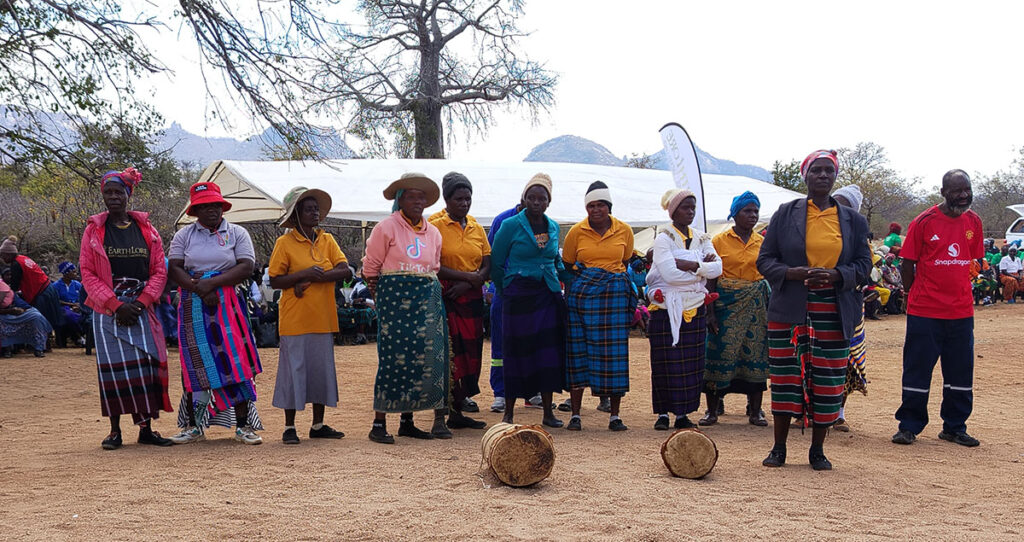
Mai Beauty Nhamoinesu explaining how life in Mutsinzwa has also been transformed during these last 10 years.
Life in Mutsinzwa has also been transformed during these last 10 years. Mai Beauty Nhamoinesu explained:
“EarthLore’s support has reconnected us with our heritage and traditional knowledge and this makes us confident about securing our food and caring for our land. The Seed Fairs have brought seed diversity and seed sovereignty. Exchange visits have taught us water harvesting and soil conservation techniques. There is no longer hunger in Mutsinzwa. We work side-by-side with our Chief and Council to plan together for our community’s future and our work follows the natural flow of the seasons, like our ancestors used to do before us. The impacts on our environment and community are clearly visible. We have dignity as families and as a community. We have also brought back love in Mutsinzwa. We protect our Sacred Natural Sites and are restoring these sacred places. We have brought back important rituals that honour the customs and knowledge of our ancestors. During Moshosho, our first fruits ritual, we offer seeds to our ancestors and thank them for this heritage. We have also brought back Marombo, the traditional rain ritual, and this brings us the blessing of rain.”
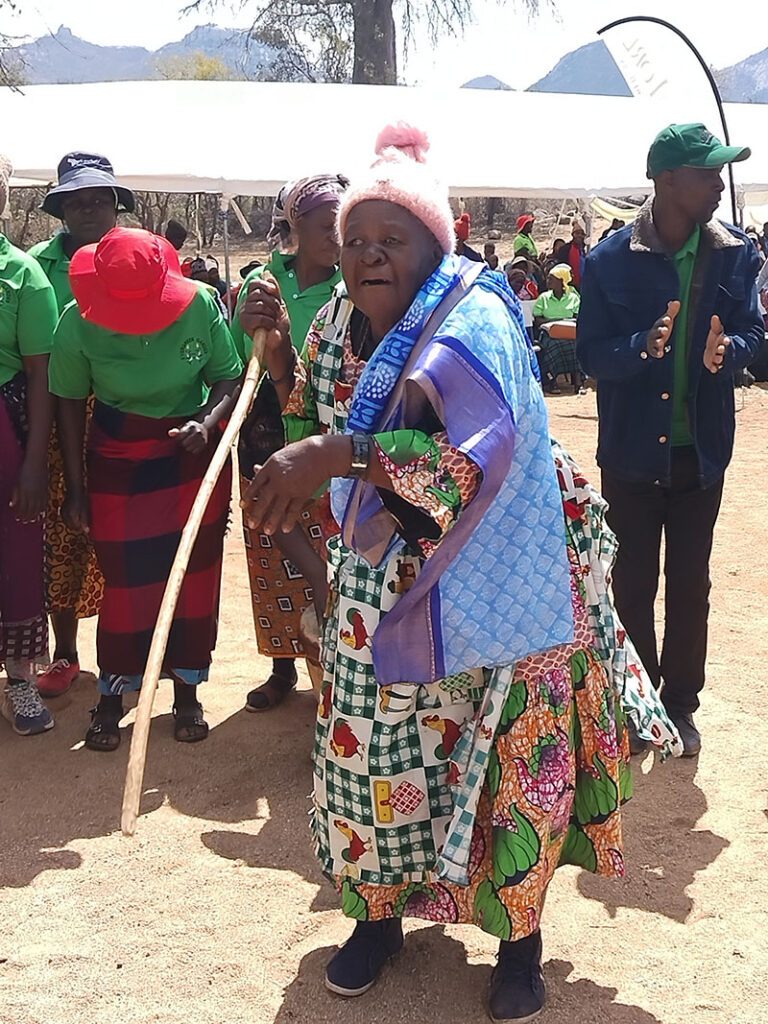
Elder from Nebarwe and supporter of Maitezano garden.
Mai Tabitha Zvapano from Nebarwe spoke next:
“Nebarwe is the newest community to bring back ancestral wisdom that we nearly lost. Through EarthLore’s seed fairs, we re-discovered numerous indigenous seeds and traditional varieties and are in the process of restoring our seed sovereignty. Before saving our own seed, which enables us to plant on time, we used to buy expensive commercial seeds from the shops. We are reviving our traditional rain rituals and by pairing this ancient knowledge with water harvesting techniques, like contour farming, we now protect our soil and secure our harvest. Where heavy rains once washed away our gardens and fields, contours now protect our soil and retain moisture to improve our yields. Maitezano, our community garden, produces food throughout the year. We are reconnecting with our heritage to nourish both our land and our community for generations to come.”
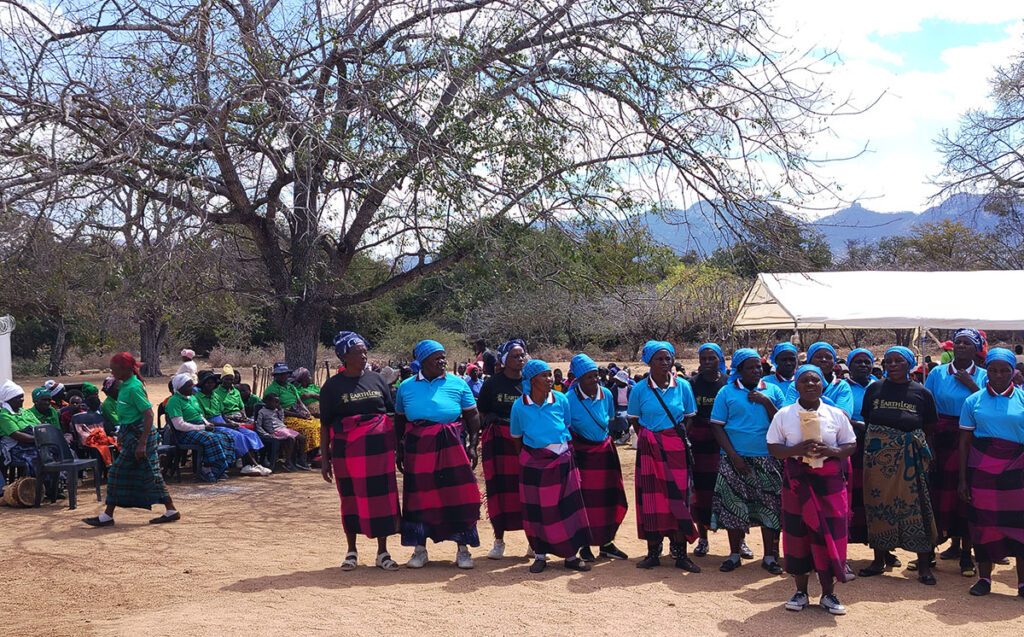
Mai Ratidzo Mabanga spokesperson for Dende garden explaining that reviving traditional seeds, rituals and respecting ancestors is the foundation of Chirorwe’s transformation and success.
Mai Ratidzo Mabanga, the spokesperson for Dende Garden in Chirorwe, was the final speaker. She ended the community reflections with these powerful words:
“EarthLore reminded us that farming starts with the Spirit and that restoring the land requires honouring those who came before us.. Now we work with our ancestors. Our garden was well-established when EarthLore arrived in 2015 but we were growing foreign crops. We had discarded the traditional seeds grown by our ancestors and were buying expensive hybrid seeds and chemical pesticides and fertilisers that poison the soil.
“When we started reviving our indigenous seeds and traditional crops, we realised we needed to reconnect with our traditions and spiritual practices if our transformation was to be successful. This needed the blessing, wisdom, and leadership of our Chiefs, traditional leaders and spirit guides. Together, we set out to revive our sacred traditions, rituals, and ceremonies, and invited the presence and guidance of our ancestors back into our daily lives and agricultural practices. These changes helped to bring much-needed rain.
“We are still on the journey. At the moment we are moving away from plastic grain sacks and are building traditional Tsapi storage huts for our seeds and grain. We are restoring the resting places of our Chiefs and ancestors.and respecting and protecting Sacred Natural Sites under the guidance of the custodians of these places. We are building our future on a strong spiritual foundation.”
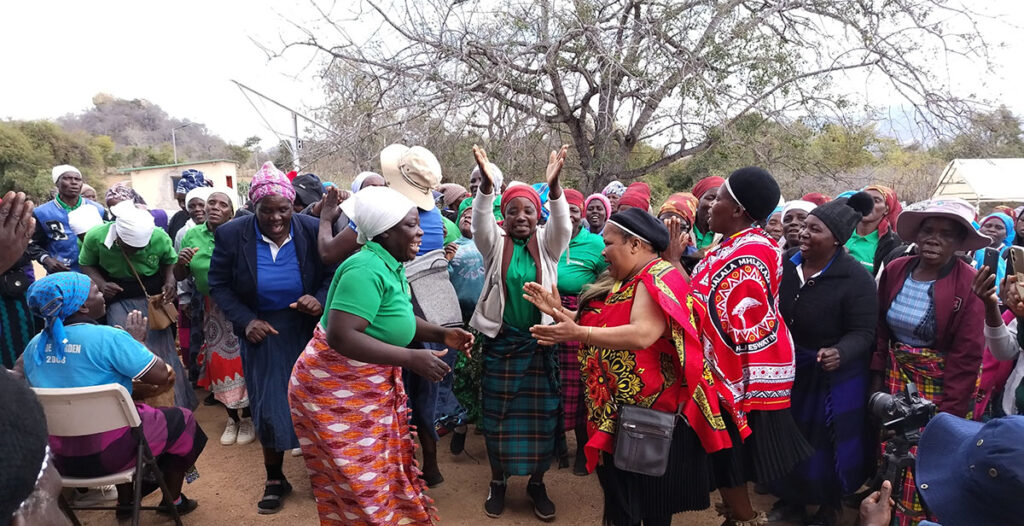
Happy ending to the 2026 Bikita Seed Fair!!
These reflections of 10 years of Bikita Seed Fairs bear testimony to the power of planting a small seed and rooting it deeply in ancestral land and traditions where it can be nurtured, flourish and grow into something great, beyond imagining.

