
Gratitude for First Fruits from Blessed Seeds

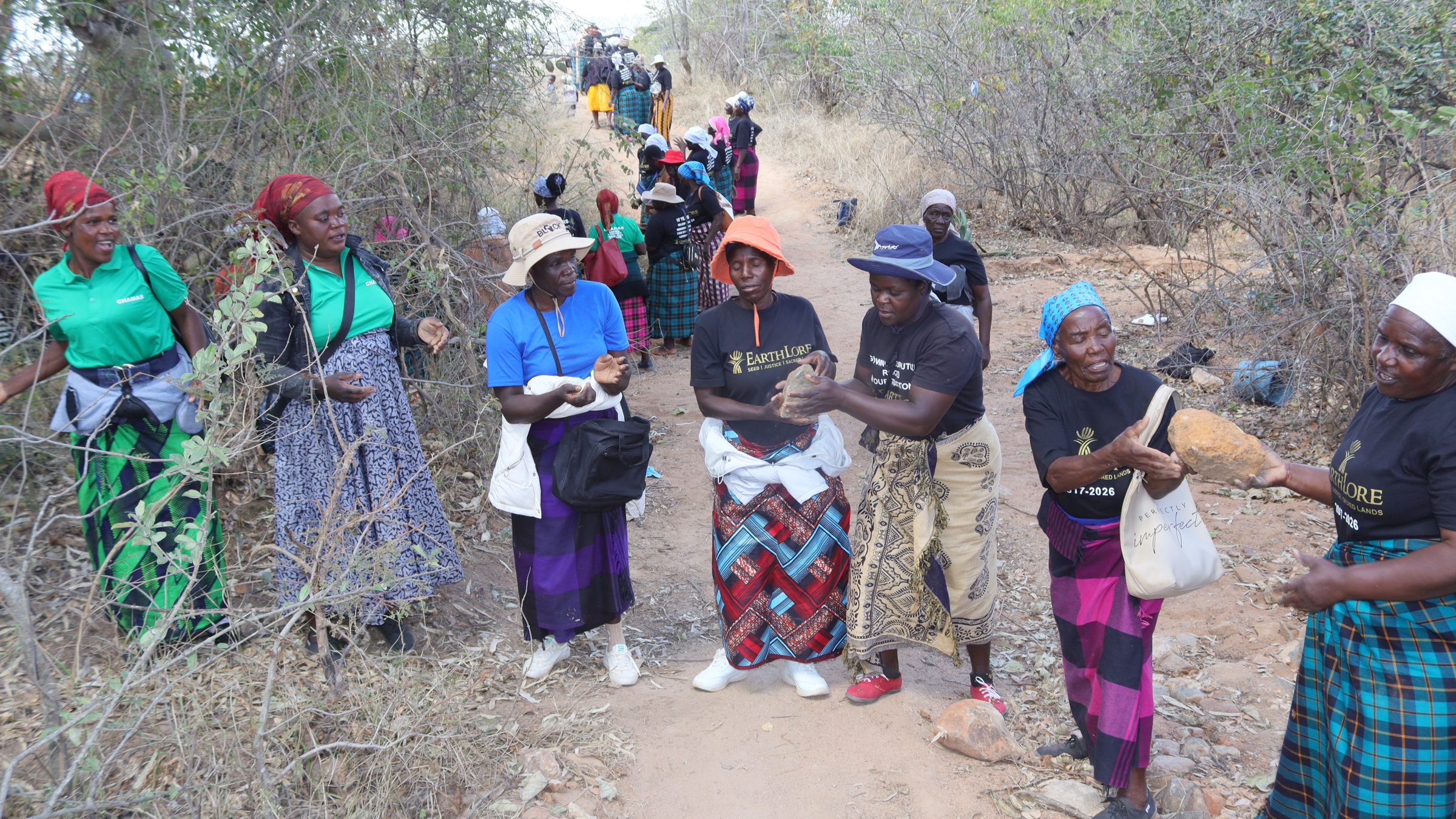
“Gogo Lamagalela, we are here to give gratitude for the harvest from the seeds you blessed in September 2025  We thank you for your consistent support in reviving traditional practices that were disappearing.”  Mashudu Takalani, EarthLore’s Programme Facilitator for South Africa, thanking the Queen Mother who attended the rituals in…

Continue reading

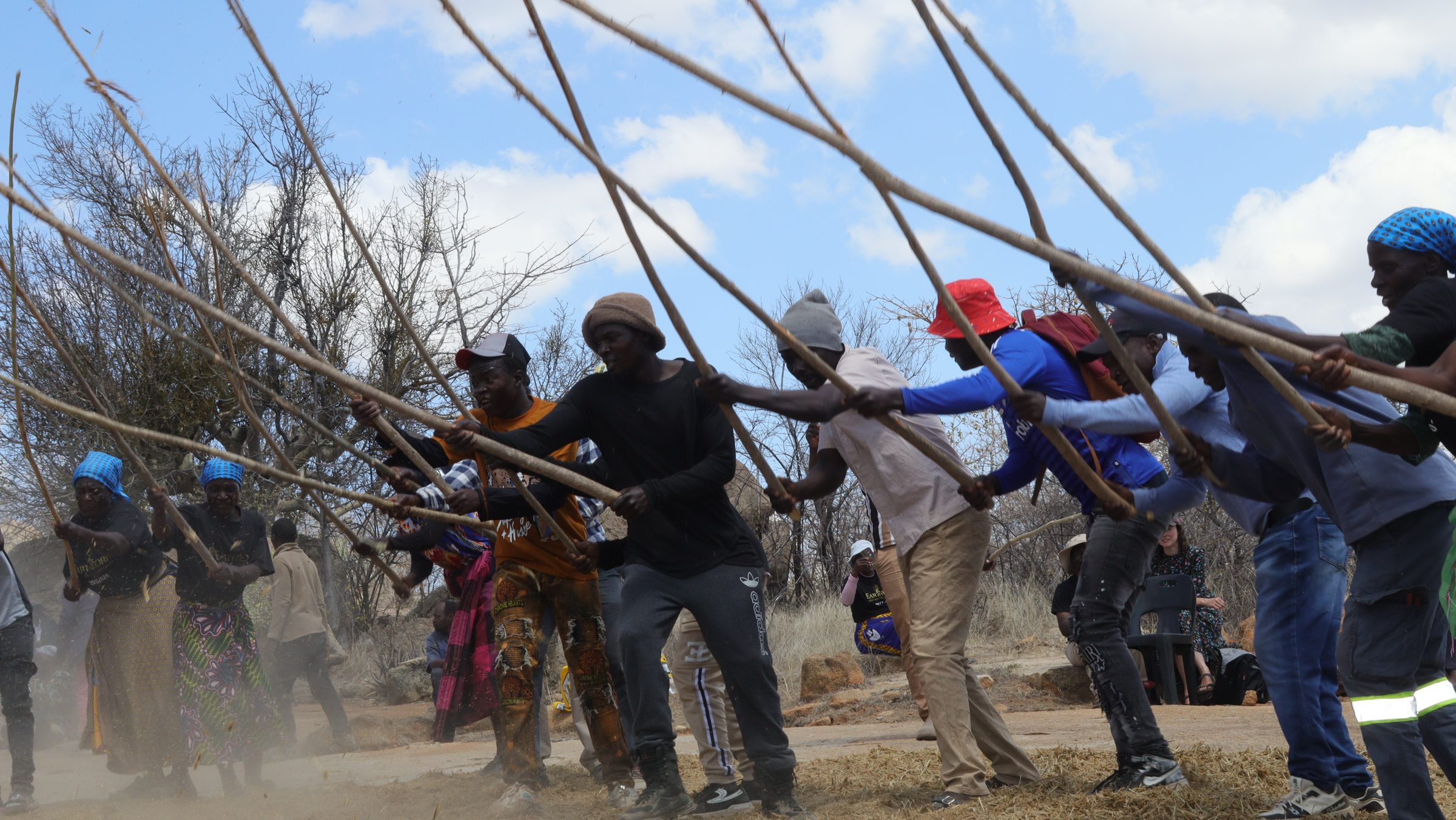
Jaka – Threshing Millet in Mamutse, Bikita, Zimbabwe

Jaka is a Shona word for traditional shared work, when community members come together to assist with strenuous tasks, like planting, weeding or harvesting a field of millet, that are too arduous for one homestead to undertake alone. This cultural tradition of solidarity builds strong community bonds, ensuring no farmer is left behind with critical agricultural tasks. Jaka keeps collective values of reciprocity and mutual care alive and also reinforces local food sovereignty.. 

Jaka was almost lost in Bikita after the Zimbabwe government started pushing hybrid maize in the 1940s.and farmers stopped growing millet. Maize is relatively easy to plant and harvest and soon became the new staple crop in much of Africa. Hybrid maize, however, requires expensive chemical inputs that damage and deplete the soil. Hybrid maize is also unable to withstand the dry weather that is typical of the Bikita region and is becoming more extreme due to climate change. Maize crops are failing year on year, leaving maize farmers hungry and increasingly dependent on food aid. 

In 2016, Bikita farmers decided to revive robust millet, one of Africa’s ancestral grains that is resilient to drought and yields abundantly. This makes it a labour-intensive crop that requires Jaka to harvest, thresh and winnow the grains. This new film from EarthLore Foundation follows the threshing and winnowing of Mai Elizabeth Turugare’s finger millet in Mamutse. We share in the joyful ceremony to complete a laborious task that builds and strengthens community cohesion. Everyone joins in the celebration: women, men, elders, children, youth, traditional healers and leaders, councillors, visitors, passers by.

The making of this engaging film by Simon de Swardt might never have happened if Clayton Zazu, from Oak Foundation, had not attended the Bikita Seed Fair and the Jaka ceremony in Mamutse. Clayton was intrigued by Jaka and how festive and enjoyable shared labour becomes when a community gathers together to complete a demanding task. Clayton reflected on what communities unknowingly lose when they opt for efficient modern technology that speeds up production and eliminates much of the heavy work involved in harvesting, threshing and winnowing. But, modern technology also eliminates celebration, dancing, singing, drumming and the sense of achievement when, at the end of a hot day, young men carry home sacks filled with clean small red millet seeds that will provide food for the coming year. The hard work of this ceremony means something to every individual and reveals how much is lost when Indigenous lifeways are colonised.

Jaka also benefits the more than human. The specialised baskets, brooms and threshing sticks used for the work are made from reeds, sedges, grasses and particular trees with strong flexible branches that grow next to rivers and streams. Requiring these materials has revived awareness of the fragile riverine habitats and contributed to the renewed protection of rivers and streams and wider landscape regeneration. .

The Jaka ceremony is an example of what is to be gained from remembering Indigenous farming practices where every individual values the whole, and the whole values them. . Reviving seeds and practices that are interconnected with rituals and ceremonies bring back a holistic system that supports physical, mental and spiritual wellbeing for a wide community of life.

Water Harvesting in Bikita

Mai Jange, one of the farmers that EarthLore is accompanying in Masasire, Bikita, could not wait to share with the EarthLore team how her water harvesting structures are performing. Masasire is an area that is very hot, water-parched and the soils are baked. These impressive photos give a sense of…

Continue reading