


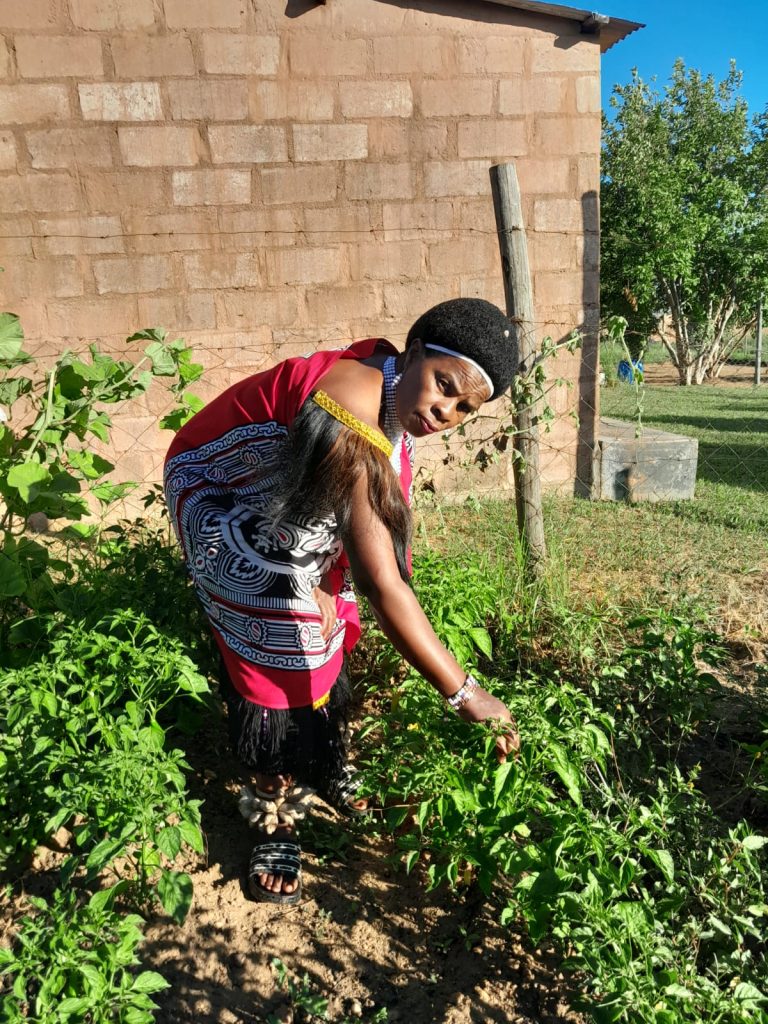
Make Thandi Mkhonto
Thandi Mkhonto’s story
My name is Thandi Mkhonto. I am a farmer and I live in Julius Mkhonto, Elukwatini, Mpumalanga, South Africa. I am passionate about farming and I try to make a positive difference in my community.
Before EarthLore came to Elukwatini, we used to have so many challenges. Money, food, fencing, water, and a growing sense of hopelessness. We were unable to solve issues in our community and kept waiting for the government to come and sort out our problems for us, which they never did.
I was fortunate to attend two agroecology training workshops in Mazwimba, Venda, South Africa, and the first Uluma or first fruits ritual ever performed in the community. Old grandmothers and grandfathers, some in their 90s, could not remember this ritual being performed.
These experiences deepened my understanding of farming in harmony with nature and the importance of taking care of the environment and protecting biodiversity.The Uluma ritual made me aware of the importance of indigenous knowledge and our heritage and highlighted the spiritual connection between people, our traditional seeds and our land.
In Mazwinba, I saw two gabions in the stream flowing past the Mazwimba Heritage Learning Centre. These rock structures prevent erosion by slowing down the flow of the water to reduce soil erosion and help nature heal.
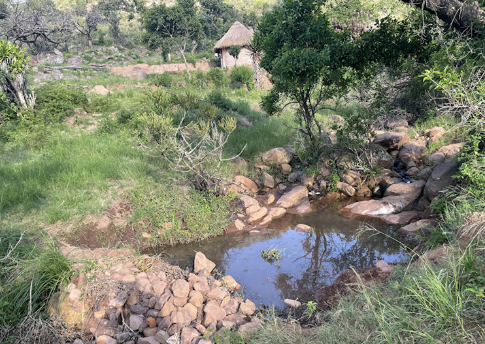
This photo of the gabion built below the Mazwimba Heritage Learning Centre, shows how it contributes to water harvesting by creating a small dam to store the water from a spring that started to flow again after the upstream gabion had been built. These gabions inspired me to return to Julius Mkhonto and share my experiences.
During the rainy season, we are faced with the problem of children crossing an eroding gully that is getting more dangerous with each passing year. I sat with a group of women farmers and explained my idea. Together we could build a gabion, like those I had seen in Mazwimba. We could brew mageu, a traditional non-alcoholic drink, for our refreshment and to give us energy. We could also eat food from our thriving communal vegetable garden that produces a variety of crops and enough vegetables for our own use, as well as for sale, providing us with food security and economic opportunities. And so, on the chosen day, we met together as one to build our gabion to slow the flow of the river and stabilize the soil when it rained. The gabion would also provide a safe crossing for our children.
As we worked together, sharing stories, songs and laughter, a sense of community and accomplishment filled the air. By the end of the day, the gully had transformed into a safer crossing for the children, and we celebrated our success with a refreshing cup of mageu.
We no longer wait for solutions from the government, we create our own solutions!
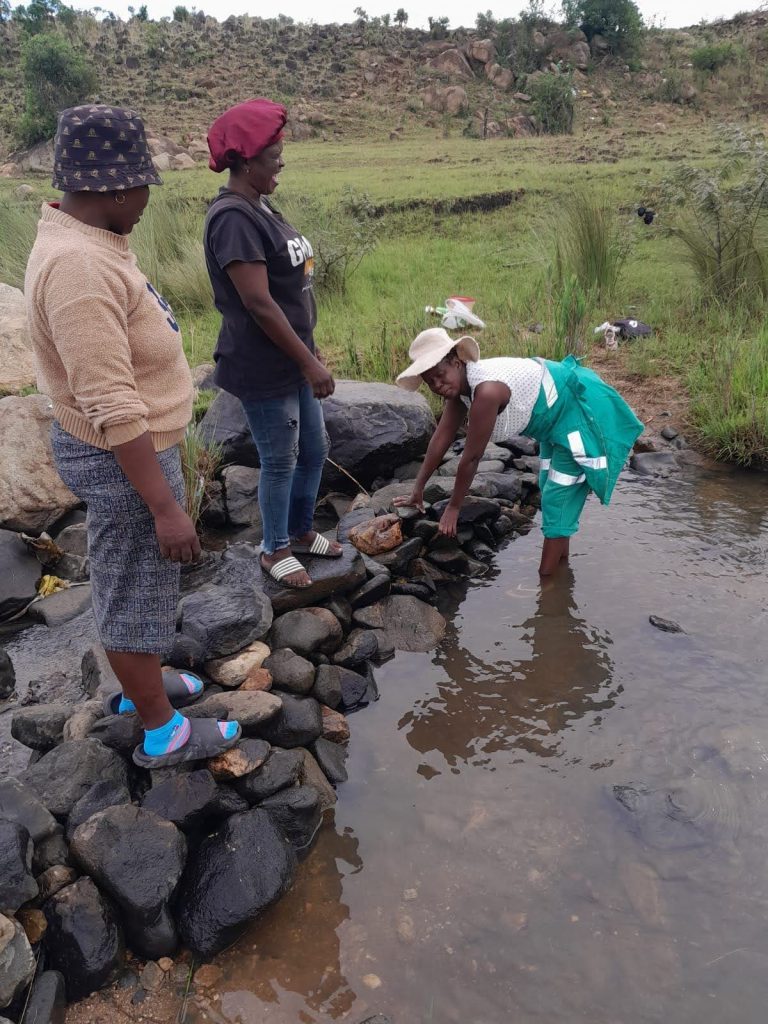
The gabion built by women farmers from Julius Mkhonto to provide a secure crossing for school children and slow down the flow of water to reduce soil erosion when the heavy rains come.

