


“Gogo Lamagalela, we are here to give gratitude for the harvest from the seeds you blessed in September 2025 We thank you for your consistent support in reviving traditional practices that were disappearing.” Mashudu Takalani, EarthLore’s Programme Facilitator for South Africa, thanking the Queen Mother who attended the rituals in February.
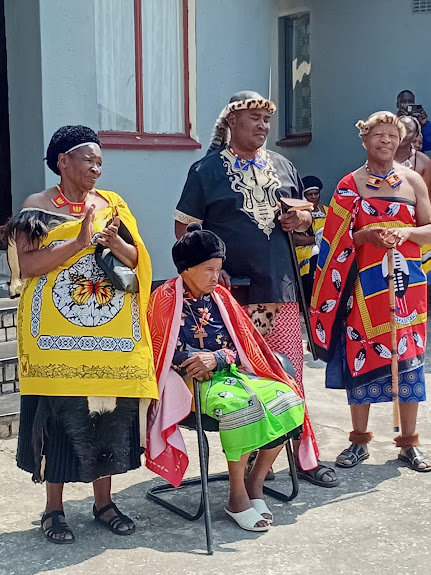
Elderly Queen Mother, Gogo Lamagalele, at the seed blessing ceremony in September 2025:
Despite the looming heatwave, the warm morning of 19 February 2026, saw the Embhuleni Tribal Authority homestead at Emanzana, Mpumalanga, South Africa, coming alive with the sounds of singing, clapping, and purposeful footsteps. Community members from Julius Mkhonto, Avontuur and Enkaba were arriving, bearing offerings of first fruits, marula, mango beer, chickens, fruit trees, reed mats, and honey. Their anticipation permeated the preparations for the Ukwetfula ritual, an opportunity to express gratitude and to honour ancestral traditions through the offerings of Ubuganu – sacred fermented traditional marula beer together with the season’s first harvest. For this year’s ceremony, however, mango beer was brewed because the marula fruit had not yet fully ripened, however, there was an abundance of mangoes and so mango beer was brewed instead. For many people, this was the first time they were tasting delicious mango beer. The switch from marula to mango beer demonstrates the adaptability and flexibility of farmers in response to shifting seasonal patterns.
The homestead buzzed with activity. The air carried both celebration and reverence, a sense that something that had faded was returning. The Ukwetfula ritual had once been central to seasonal life but colonialism and Christianity ridiculed and demonised the ritual to a point that it no longer felt safe to perform traditional ceremonies. The Ukwetfula ritual had been neglected for 25 years, along with the knowledge of how to perform the ceremony. Three years ago, Ukwetfula was revived at the Embhuleni Tribal Authority. People were overjoyed, especially those who remembered the colourful celebrations from their childhoods.
One elder, with tears of joy in his eyes, said:
“I remember these rituals when I was a young boy, and then, they disappeared. I didn’t understand why. I never thought we would celebrate them again. I am so grateful I have lived long enough to celebrate them again today.”
With each passing year the Ukwetfula ritual grows stronger and gains potency. This return to the ancestral path unites people, creates greater cohesion and brings happiness and joy.
Ukwetfula is mainly a female-led ceremony that reaffirms the community’s connection to their roots. The women were beautiful in their vibrant traditional Swazi attire adorned with beads. They gathered at the entrance to the Embhuleni Tribal Authority to prepare their Ukwetfula offerings of freshly harvested crops from the fields. The women stood apart from the girls, who looked at them with open admiration, watching their movements and learning from them, aware that they carry the traditions before them.
The ceremony created an inclusive space that extended beyond those physically present. Community members who could not attend had entrusted their crops to others to give as offerings, ensuring their participation would be symbolically recognised. This practice not only honoured collective contributions but also enabled a wider involvement of community members, fostering care and shared responsibility.
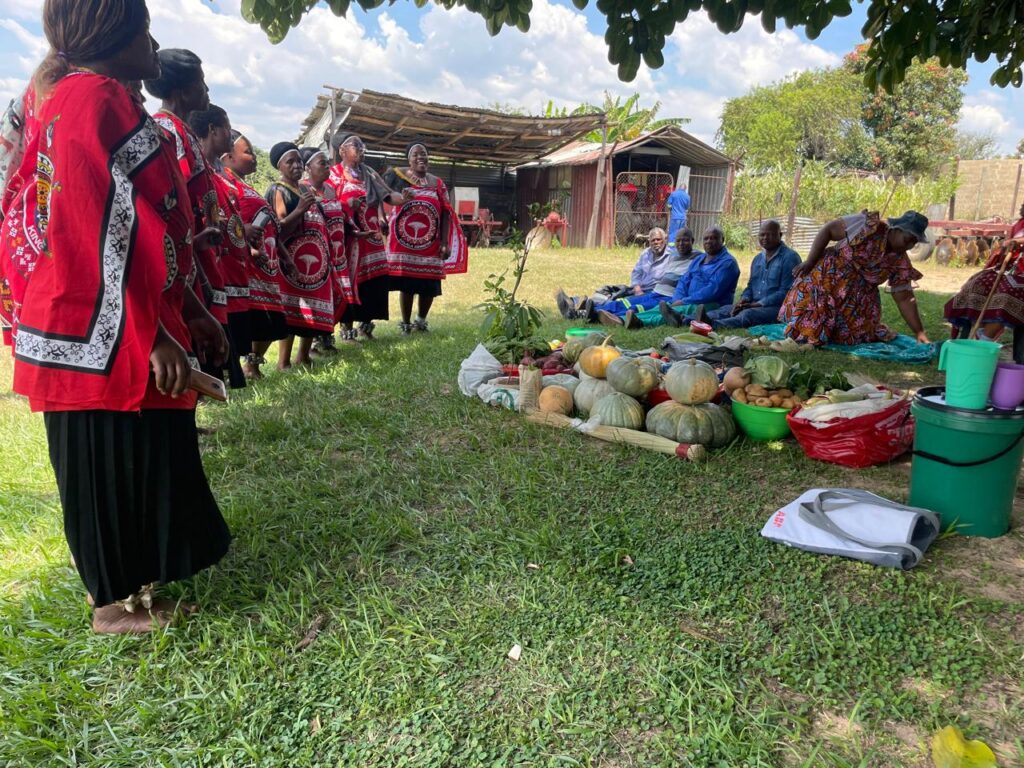
Women ready to load the first fruits and gifts on their heads to carry them to the royal household as a thanksgiving offering.
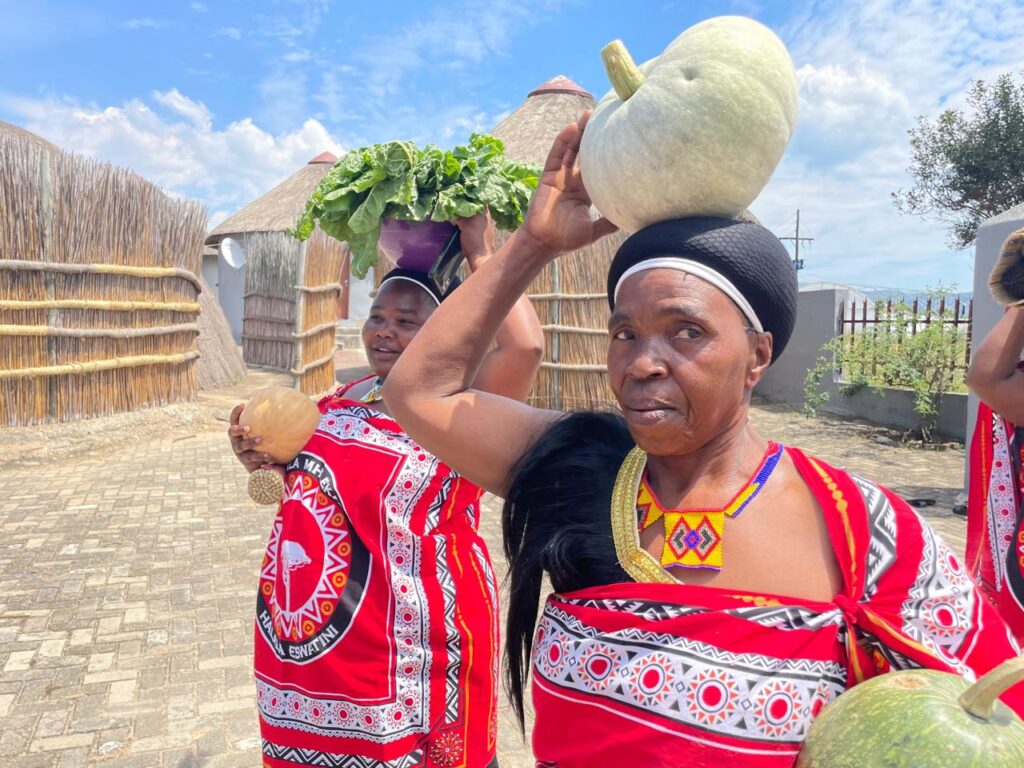
Woman expertly balancing a pumpkin on her head.
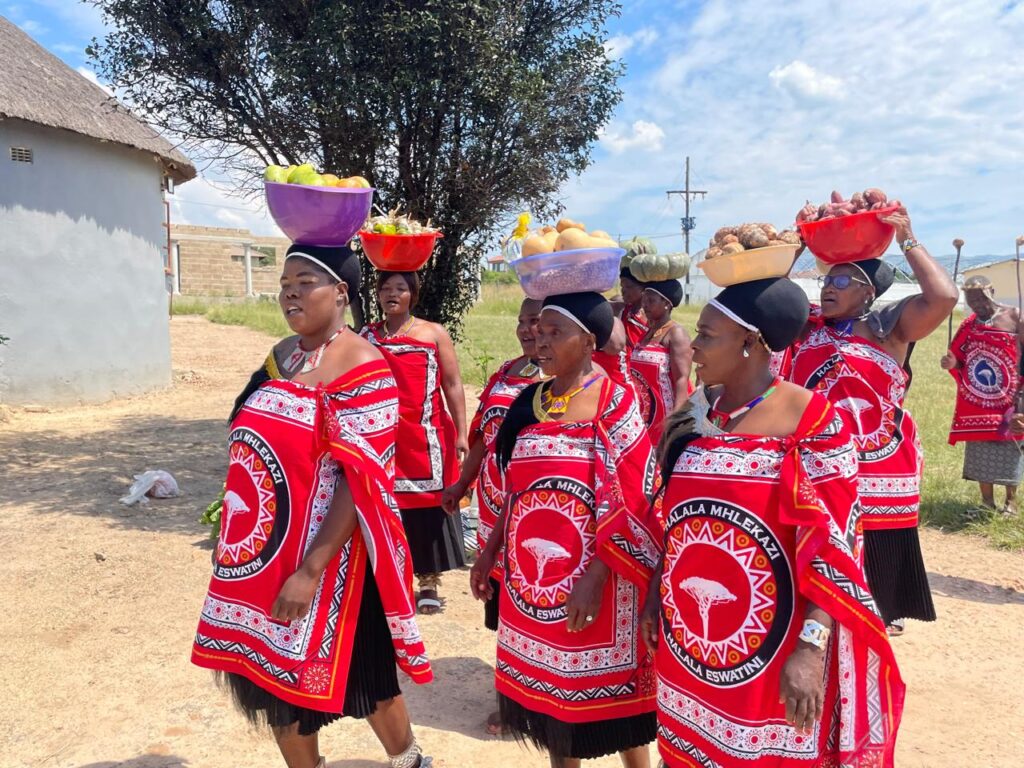
Women, adorned in colourful traditional Swazi attire, carry produce as offerings symbolizing gratitude and abundance. Their songs and dances express joy and reinforce unity and shared heritage.
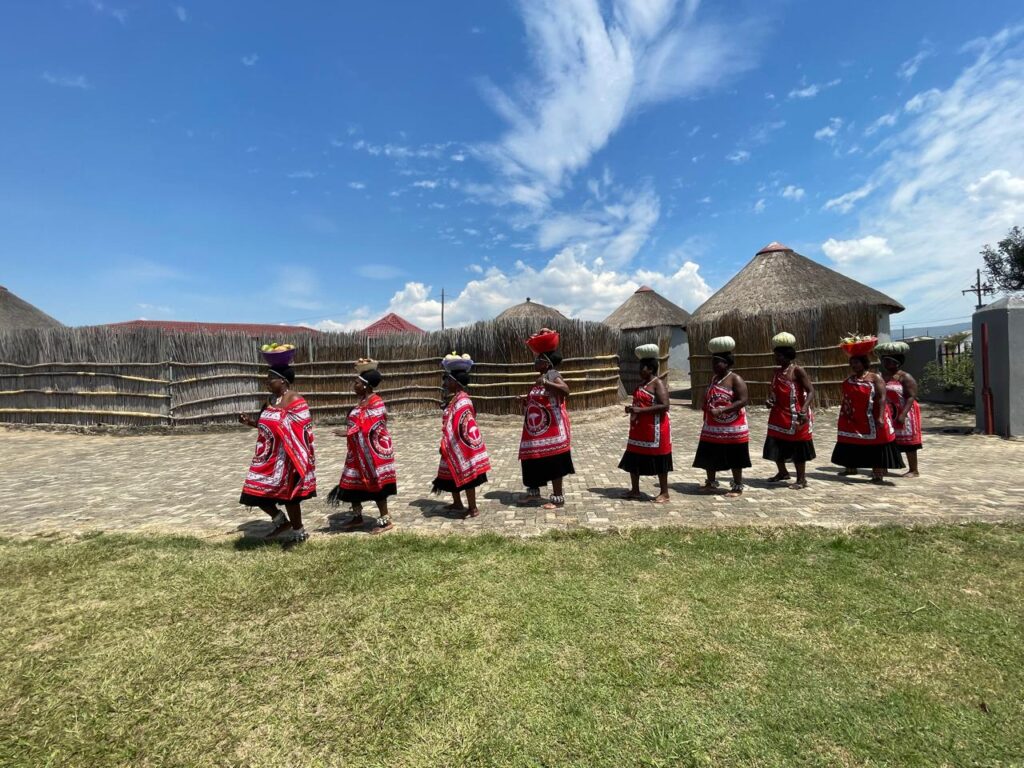
The graceful walk of these women, bearing gifts on their heads,.embodies the deep-rooted traditions of their ancestors,
The women expertly positioned the first fruits and gifts on their heads to carry them to the royal household to present to the Chief’s representative and the Chief’s family. They carried orange and green pumpkins, calabashes, watermelons, baskets of onions, basins filled with colourful red, yellow, blue and white maize. Some carried buckets of bright orange mango beer, balanced on their heads. They moved with grace, embodying the deep-rooted traditions of their ancestors, with the men accompanying them with rhythmic singing, creating a vibrant unity that strengthened the spiritual energy of the occasion. The royal household gratefully received the gifts, one by one, lifting the loads off the heads of the women and taking them into the house to be blessed. This marked the end of Ukwetfula.
The Ubuganu, or marula ritual, then followed directly afterwards, where the Chief’s representative was served with mango beer – not the traditional marula beer. By tasting the ceremonial mango beer and taking bites from ripe fruit, the royal representative symbolised ancestral acceptance and blessing, affirming the importance of communal sharing, cultural continuity, and the restoration of indigenous ecological practices. These rituals open the way for the community to eat the crops and fruits in their fields, ready for harvesting.
The presence of the elderly Queen Mother, affectionately called Gogo Lamagalela, and the royal council, confirmed that this event was returning to the ancestral path. Despite her age and her failing voice, at times, on this morning the Queen Mother’s words rang out clearly over the gathering for everyone to hear:
“Wherever you have gathered the crops for the Ukwetfula, let there be abundant harvests. Let the soil be fertile. Let there be more crops for home and the market. Let there be no hunger, and may there be many blessings.”
The seeds blessed by the Queen Mother in September, at the start of the planting season, had completed a cycle and were now being harvested and eaten. Seeds from this produce would be collected and stored until the next seed blessing ceremony in September. It was a time of gratitude that this blessing cycle had been revived and that the ceremonies of Ukwetfula and Ubuganu had returned to Embuleni. The attendance and participation of experienced and knowledgeable elders provided guidance to continue in the footsteps of the ancestors.
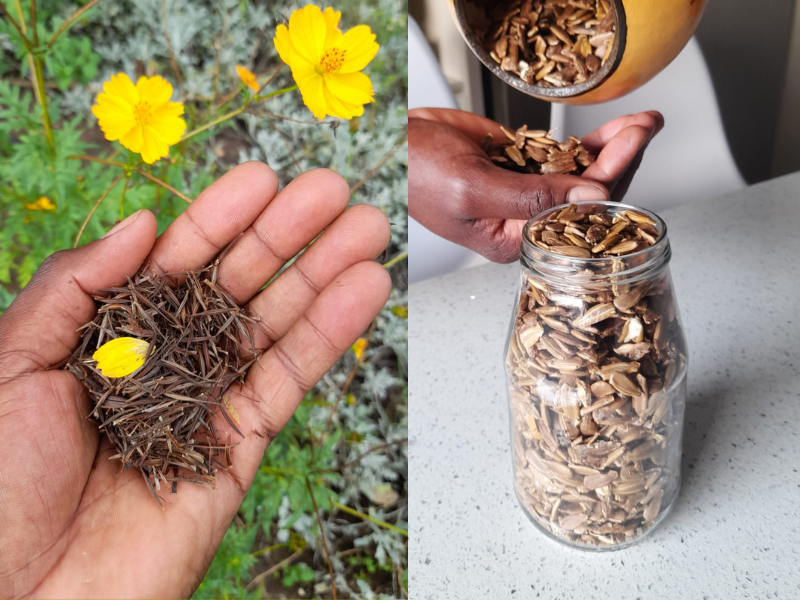
Seed collecting time has begun.
Sikhatsi sekucokelela tinhlanyelo sicalile

