


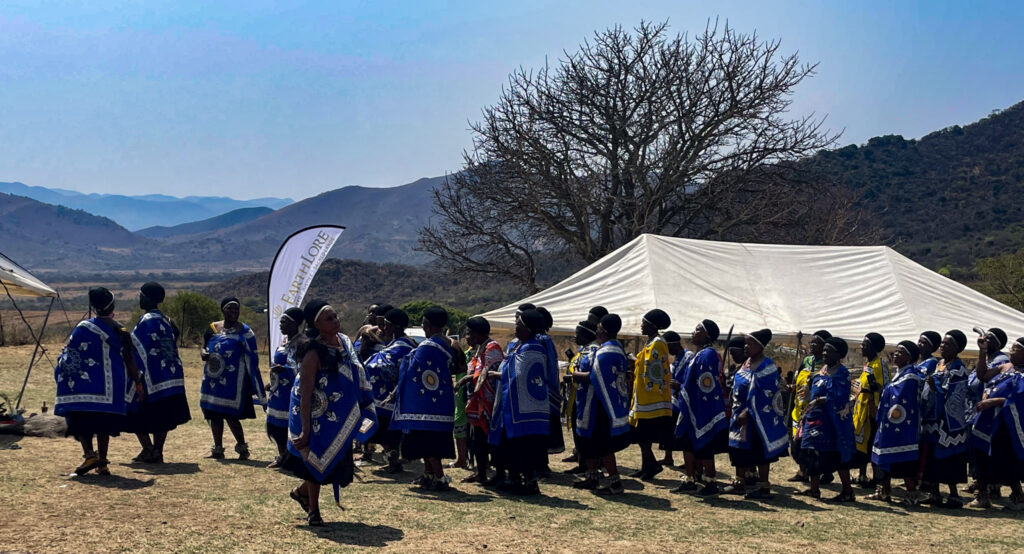
Enkaba’s rugged rocky landscape rises up behind dancing Swati women celebrating the start of the Seed Fair
The dusty road through the rugged rocky landscape of Enkaba seemed an unlikely setting for EarthLore’s Seed Fair, held on 10 September 2025. Enkaba is situated some distance from Elukwatini, Mpumalanga, South Africa, and borders on the Nkhomazi Game Reserve. Wild animals, including elephants, sometimes move out of the park into people’s fields, posing big challenges for farmers.
Enkaba farmers embraced their first opportunity to host EarthLore’s annual Seed Fair with enthusiasm. One farmer shared how everyone was feeling: “We are so excited about being chosen to hold this event at the Enkaba Tribal Authority. We are together and have the support of the chief and the traditional leaders. Everyone has worked very hard. We’ve been to other Seed Fairs and so we know what to do. We want everyone to have a great day and enjoy the celebrations.”
Enkaba is a united community where people care about each other and for each other. Struggles are shared and so are successes. It was inspiring to hear that farmers who accommodated visitors attending the Seed Fair had agreed to pool the money they received and share it amongst all the Enkaba farmers so that those with small simple homes would also benefit. This same generous spirit permeated the Seed Fair.
The fair opened with a prayer, uniting farmers from across South Africa and Zimbabwe to celebrate seed diversity and community resilience. More than 400 participants attended the celebration, almost 75% of them women, including a growing number of young women farmers. There were elders, traditional leaders, and local chiefs and councillors. There were representatives from the Department of Agriculture, the Department of Arts & Culture, the Agricultural Research Council (ARC) for crops and the South African National Biodiversity Institute (SANBI) for wild plants, who came from Pretoria. There were farmers from the communities EarthLore works with in the other Elukwatini communities of Avontuur, Julius Mkhonto and Arumburg, as well as from Venda and as far afield as Bikita, Zimbabwe. There were also visiting farmers from KwaZulu-Natal, near Mtubatuba, representing the Mfolozi Community Environmental Justice Organisation.
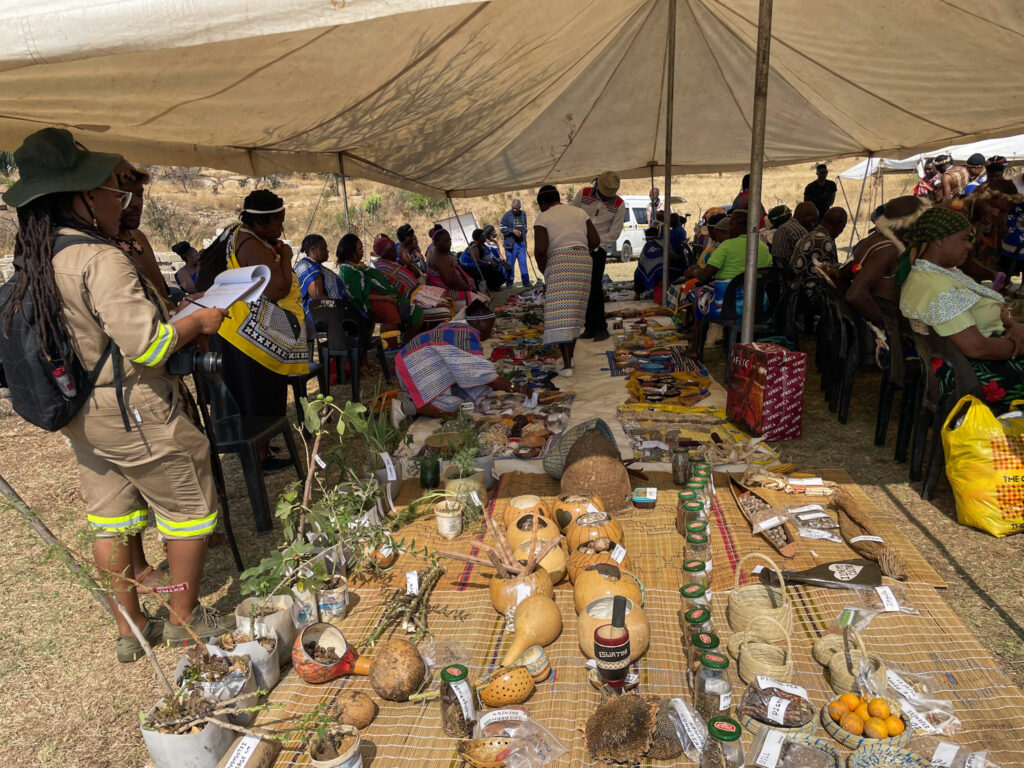
Government officials judging the exhibits documented seed diversity and seed varieties.
The event provided a platform for farmers to exchange seeds, particularly those that have been lost, sell produce, and share knowledge to revive traditional seed cultivation practices. Presenters highlighted the cultural and ecological importance of seed and preventing contamination of indigenous seeds; crop and herb diversification for nutrition and sustainability; the economic and food security benefits of saving seed and the multiplier effect of seed sharing. Others emphasized the significance of seed blessing rituals, rituals connected to planting and harvest cycles, and rainmaking ceremonies led by elders and chiefs. Insights were shared on protecting farmers’ independence and reviving indigenous knowledge.
More than 100 farmers exhibited their produce, showcasing traditional seeds, crops, wild fruits, medicinal plants, crafts, examples of organic fertilisers and manure. One of these farmers was Bongiwe Ngwenya, the young farmer from Enkaba, who appears on the EarthLore banner displaying three maize varieties that she has been cultivating and multiplying to share with other farmers. Her photo was chosen to illustrate this year’s theme: Growing our Future, Rooted in our Traditions. The large number of youth at the Seed Fair, showing interest in farming, agroecology and their traditions is important if we are to grow our future.
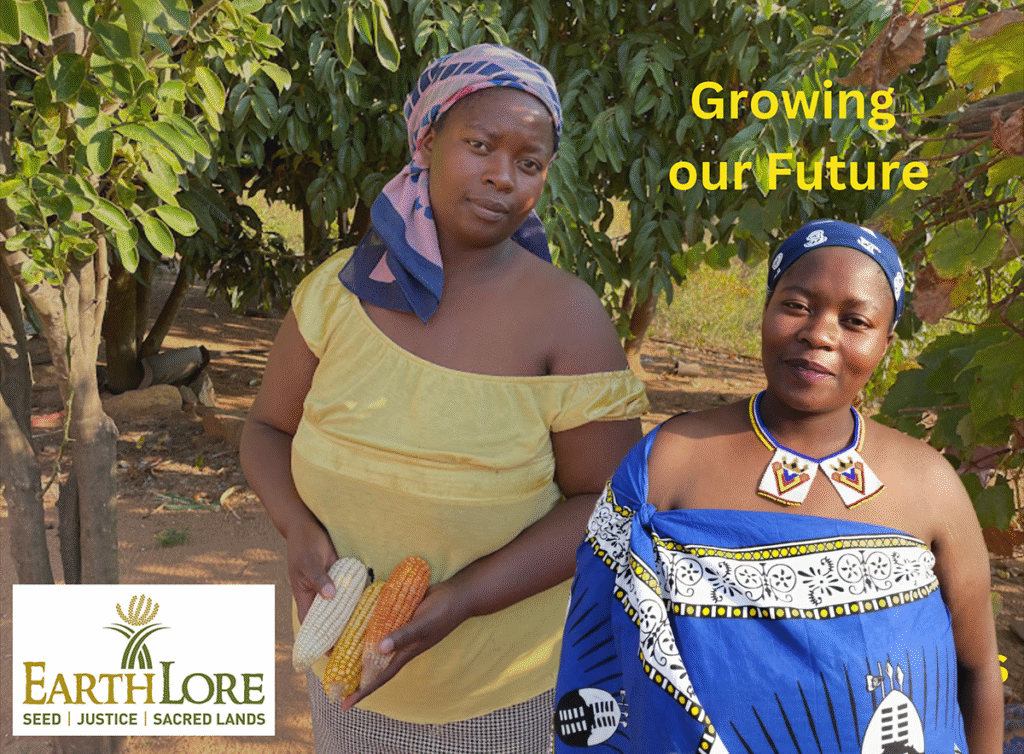
Thrilled Bongiwe Ngwenya stands in front of EarthLore’s banner for 2025.
There were opportunities for participants and officials to engage directly with seed custodians and exchange knowledge. Government officials judged the displays, documenting seed varieties and creating opportunities for ongoing collaboration and support. Gracie Ndlovu, who has retired from the Department of Environment, remains a strong supporter of EarthLore’s work in Elukwatini and is always willing to judge the displays at our seed fairs. She congratulated the farmers, saying: “Everyone did very well. The seeds were many and there were lots of varieties and cultivars on display. I encourage people to plant crops, especially small grains and indigenous seeds. Let’s plant trees and protect our Earth. Let’s continue the good work.”

