


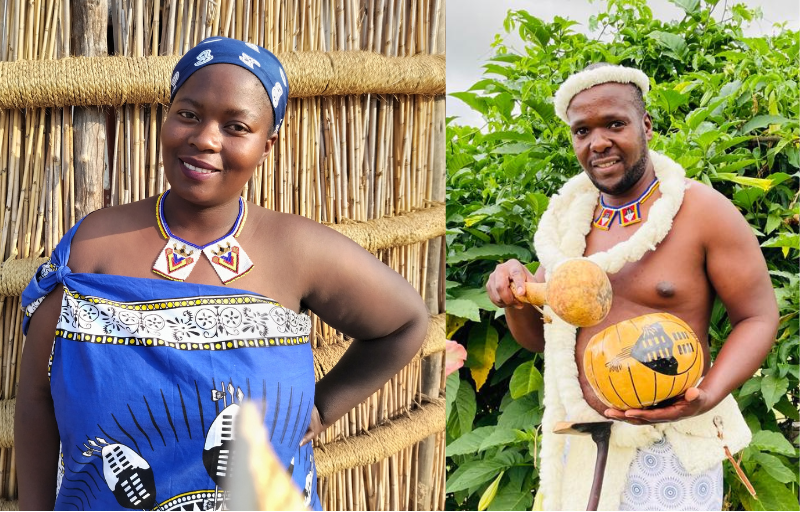
by Patric Thwala & Bongiwe Ngwenya
Our story is rooted in seed, soil, memory, and hope. It is a story of youth finding a place in farming through agroecology, a dignified and promising path where young people and elders work side by side – wisdom meeting innovation in the fields.
My name is Patric Thwala from Nhlazatshe and I am Bongiwe Ngwenya from Enkaba, two rural farming areas near Elukwatini, Mpumalanga. We are passionate young farmers who fell in love with farming at an early age. Our journey began as children, observing our parents and helping them with weeding, watering and other simple chores in our fields and gardens. Without naming it as such, they were practicing agroecology every day. They understood and worked with nature. They saved seeds and nurtured the soil. They relied on natural methods and the regular rainfall that fell at that time. Their way of life meant that food was never out of reach. Nature herself was the source of seeds, edible crops, compost, natural pest control and healing herbs.
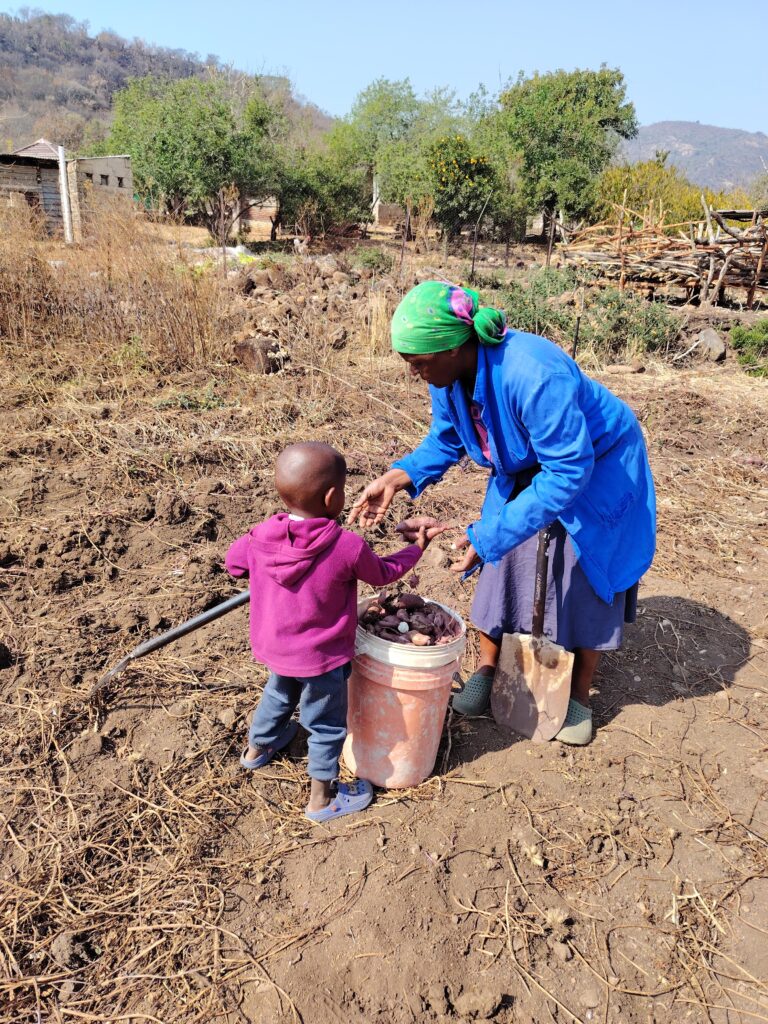
Like many children growing up in rural farming communities, Bongiwe and Patric developed their passion for farming as young children helping parents and grandmothers in their home gardens and fields
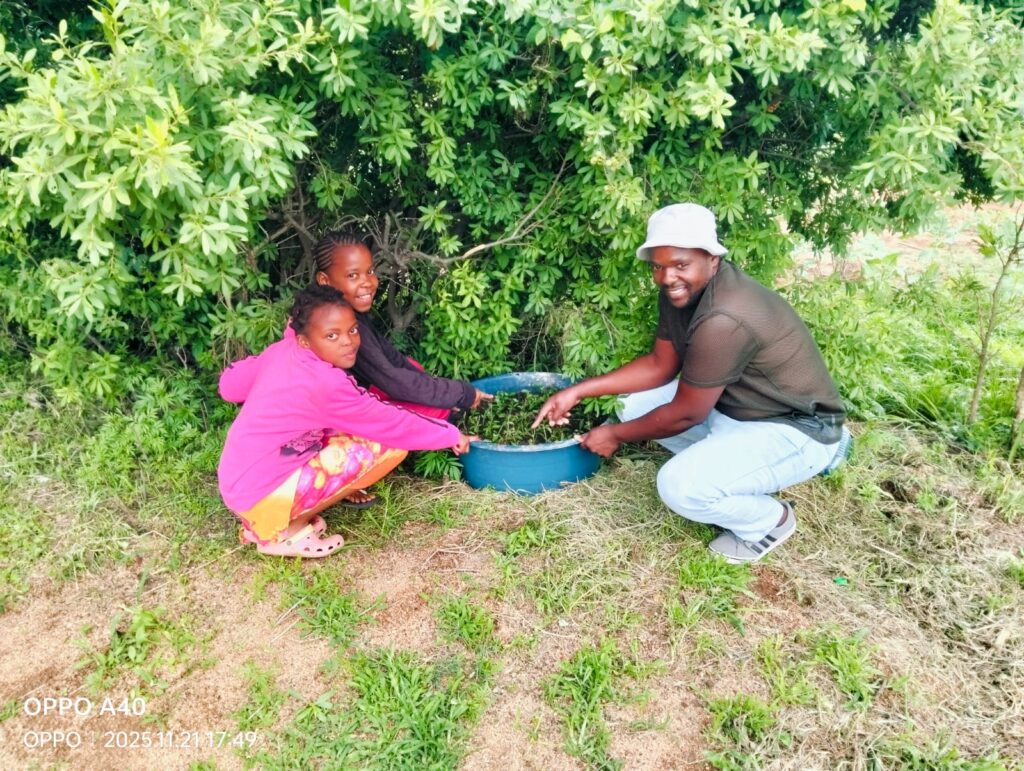
Patric involves his children in farming tasks, like propagating cuttings and harvesting crops. This is a good way to encourage children to become passionate farmers when they grow up
From them, we learned that farming is not just about producing food; it is about respect for the land and trust in its ability to provide. Most importantly, we learned that when you respect and care for the earth, it cares for you in return. This is what Agroecology teaches.
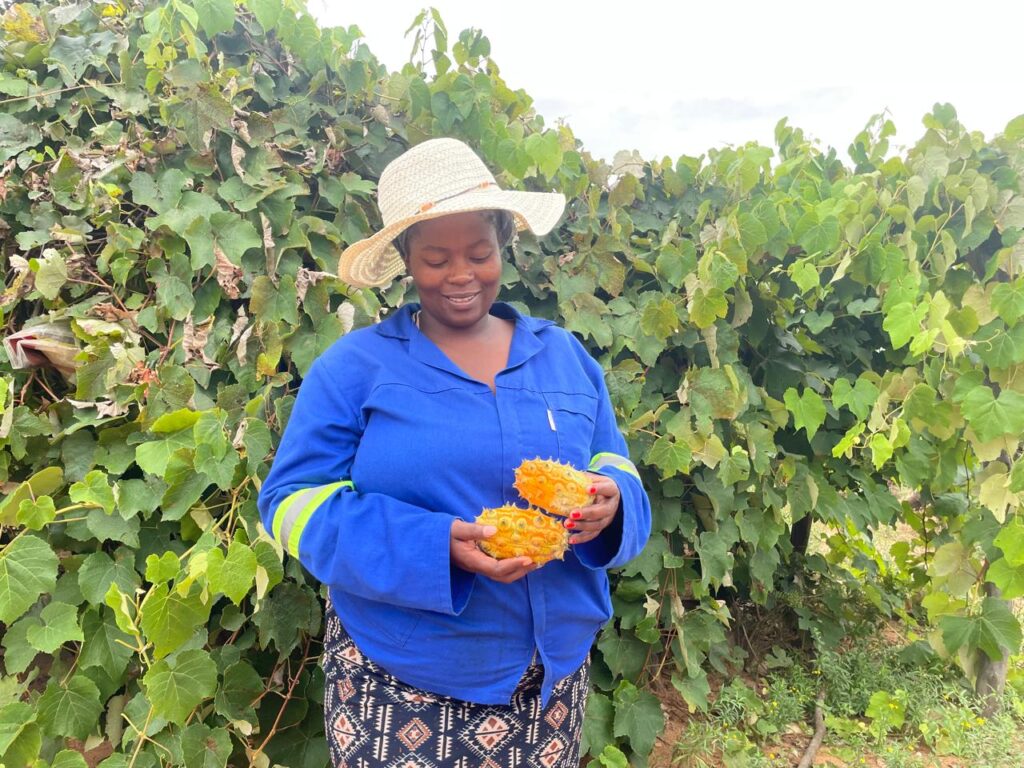
Bongiwe with two spikey African cucumbers from her garden that grow prolifically in the Enkaba area
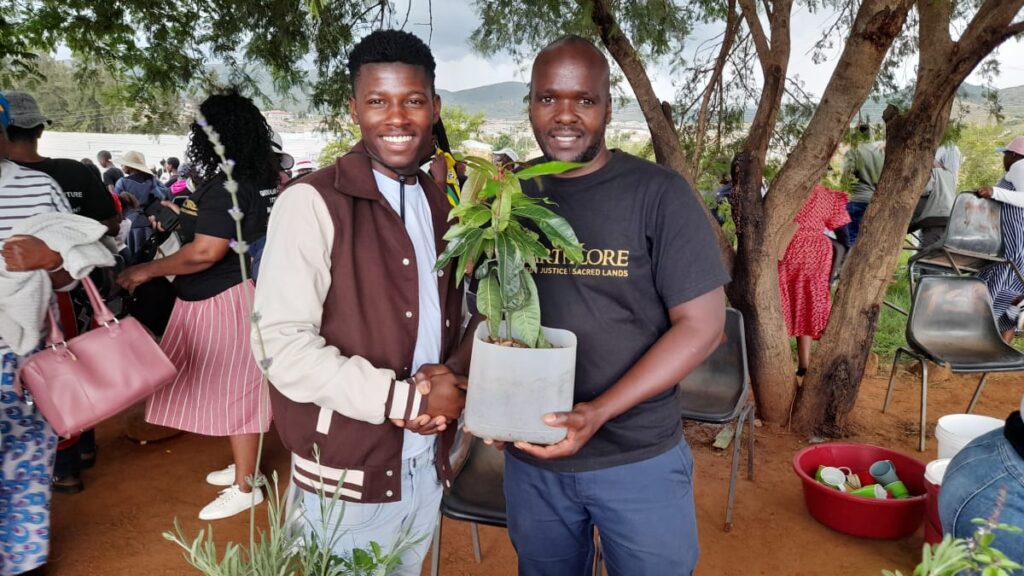
Patric handing a fruit tree to Mxolisi Ngwenya from Enkaba. The prize included an opportunity to visit Patric’s garden to harvest honey and pick a variety of vegetables.
Bongiwe sitting with other young farmers at the Seed & Food Festival in Enkaba where she displayed saved seeds and fresh produce from her garden.Our elders’way has solutions to many of the challenges farmers are currently facing, like healthier soils, better harvests, more nutritious food, and resilience during hard seasons, and low production costs by not needing to buy GMOs and hybrid seeds or poisonous chemical inputs.Today, we continue these practices. Saving seeds keeps us independent and ready for each planting season. Diversifying our crops strengthens our food security and protects the soil. Organic compost and fertilisers heal the soil while increasing our yields. With every season, the land becomes healthier and richer, and so do our communities.
Our story is about farming and youth. Young people should be included in shaping our communities. We need access to land, community gardens, training spaces, and markets where we can grow not only food but also livelihoods. Schools and local institutions can play a vital role by supporting young farmers and creating a steady demand for their produce. It is vitally important for school children to eat fresh, healthy, nutritious meals, as well as the sick, the disabled, the elderly,
To reach this future, we must continue learning and practicing agroecology, expanding our production, and sharing knowledge widely. We must also use platforms, like market days and social media, to tell our stories and connect with more communities and spread the work.
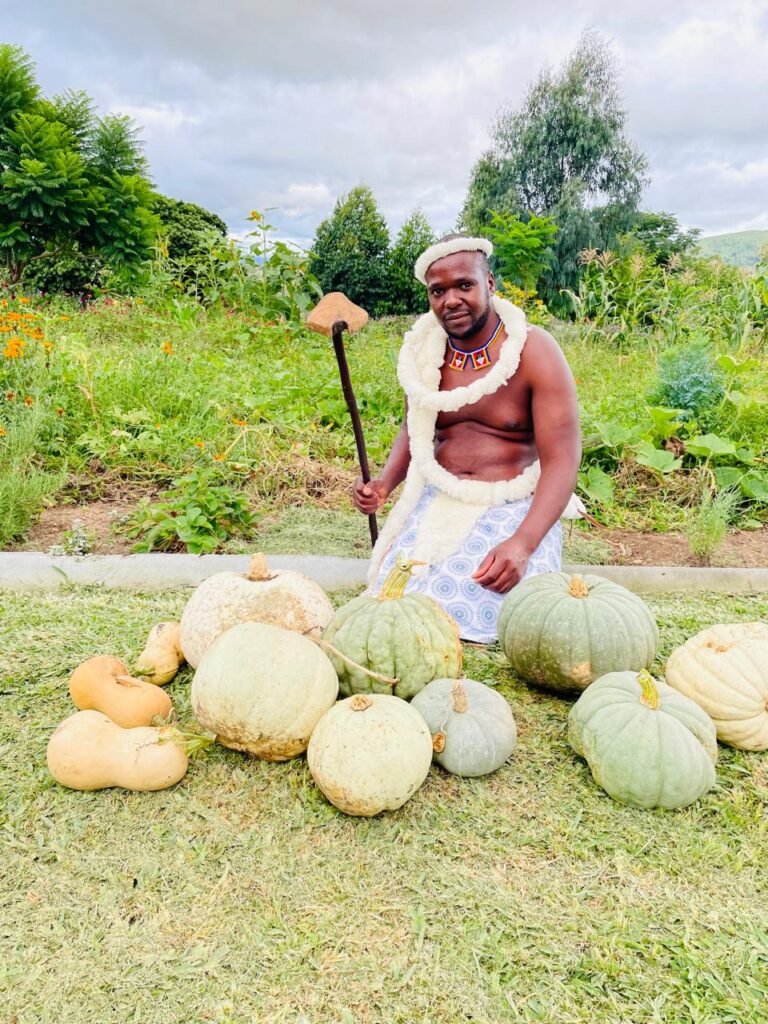
Patric provides food for his family and relatives throughout the year. He also donates, exchanges and sells surplus to people in his community.
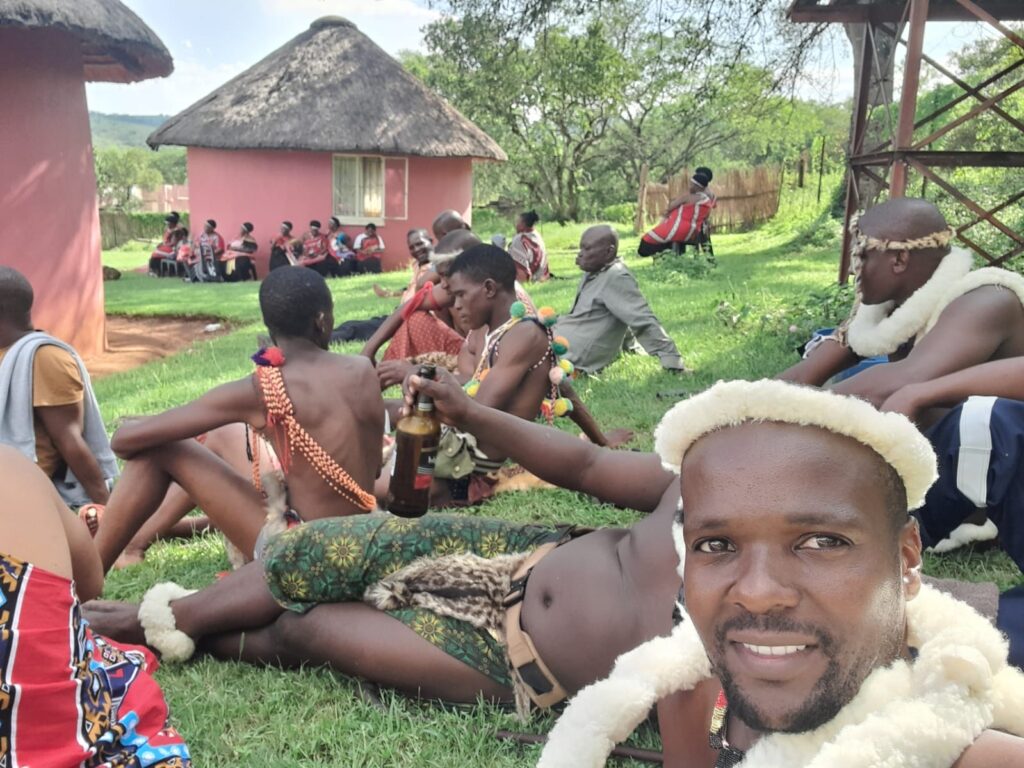
Patric proudly wears traditional Swathi regalia when he attends rituals and ceremonies, like this Kwetfula at Emjindini Tribal authority to give thanks for the harvest
Agroecology is more than farming, it is a movement of hope. It is a way for young people to reclaim our future and create viable livelihoods; to restore the land; and to build food systems that are alive, resilient, sustaining and sustainable.
Every traditional seed we save and every field we plant is already growing that future.

